James Thornton interview
The highly effective environmental lawyer who founded ClientEarth and now is Visiting Professor at the University of Oxford's Smith School of Enterprise and the Environment.
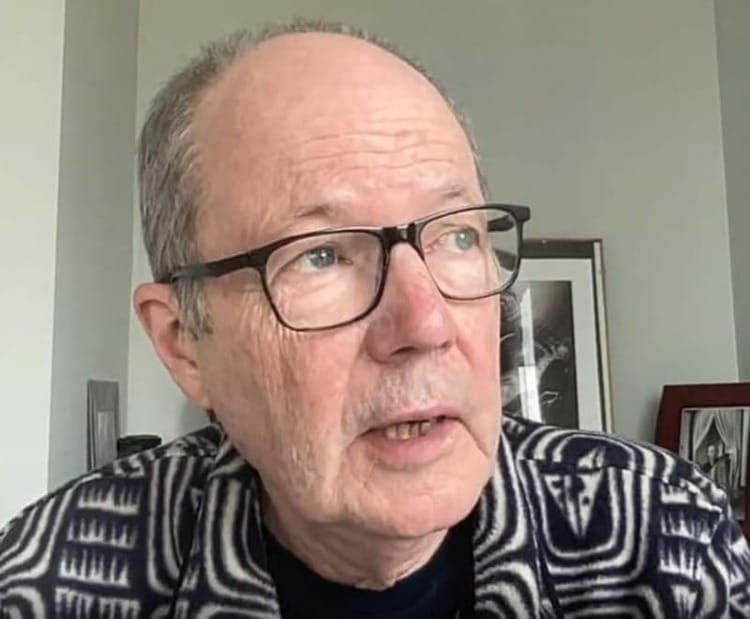
In this comprehensive interview, environmental lawyer and advocate James Thornton reflects on his remarkable career trajectory, from his early encounters with nature in Queens, New York, to his current Professorship at the University of Oxford's Smith School of Enterprise and the Environment.
Thornton recounts his formative years studying philosophy and law, which propelled him to pioneer high-impact environmental litigation. He discusses his founding of ClientEarth and its significant legal victories across Europe, including landmark rulings against diesel pollution and the expansion of coal infrastructure.
Later in the interview, Thornton details his work with the Chinese government to establish environmental laws and courts and the training of new judges. We discuss the world's single largest ecological restoration project: the Yangtze River basin in China. Finally, he outlines his new mission to accelerate the global transition to renewables by helping Western institutions learn from China's rapid advancements in green energy technology.
JS: Growing up, James, was there a specific place in nature that felt like home to you and how did that connection shape your early sense of yourself?
JT: I was born in New York City in Queens in a nice suburb called Douglaston and we had a large backyard and I spent an awful lot of time on my hands and knees looking at insects. Back then, I could bicycle, which I did every day, I could down to the bay which was part of Long Island Sound. So, I had exposure to wetlands and to horseshoe crabs and to lots of birds. You would think a guy from Queens may not have had a lot of exposure to nature, but I found a lot of nature where I was and I really absorbed it and merged with it. And my pals and I used to go down to the wetlands to watch birds and discover snapping turtles and it was a wonderful, nature infused childhood.
JS: I think you've described yourself as a pensive child. What do you remember of your early life questions about the world?
JT: I was always asking about the meaning of things. As a very small child, I remember repeating words to understand where they came from and what they might mean. So, when I was about six maybe, I noticed the difference between the words man and woman and repeated them to try and understand the structural meaning. How did these words come about? And it left me with a mystery more than an answer. Another one was the time I walked into my older brother's bedroom, he is 10 years older and I saw a copy of a book about Socrates and picked it up, this is maybe when I was eight or something, and I said I need to know what he knew and that became a theme for me. I went on to study philosophy.
My first great teacher outside my family was an entomologist at the Museum of Natural History in New York. Th museum was accessible by public transport from Queens. She was a wonderful woman called Miss Alice Gray, in her middle age at that time, very brilliant and very eccentric. She taught me a great deal about how to be a young scientist. She had founded the Junior Entomological Society which was the kids’ branch of the very august American Entomological Society. We used to go on field trips and I got my first fundraising experience trying to riase money for the society. These young teenage scientists went to the Florida research station of the American Museum and the Arizona research station and worked with scientists there. So pensive, maybe, certainly inquisitive.
JS: How did the political and social atmosphere of your youth influence your decision later to become an advocate?
JT: Quite a lot. My father was a law professor. We were four boys around the dinner table and I was number three, my father would often pose a question and then we had to all argue out the question and he was extremely skilful in the Socratic method, being a law school professor. So he would probe and probe and you couldn't get away with anything but you had to try, the game was to make a better argument than your siblings and if you did really well he would lick his finger and put a score in the air. One for you. We were all thrilled by this game and of course competed the best we could. And that was great training for being an advocate. Because, I realised later that, by the time I got in law school, I'd been trained around that dinner table to never feel in any room that there was anyone who could beat me in an argument or that I couldn't hold my own with.
JS: And the politics?
JT: In political terms it was a very liberal household. My father at that point in my life was a was a law professor at Brooklyn Law School in New York and that was a very progressive place. His teachers at Brooklyn College, a lot of them were Jewish academics who had fled Germany. And so he had absorbed this European, Jewish, German intellectual heritage. And then he was the first kid in the family to go to university and then and then on that into law school and, Iooking back on it, he I always thought that he had this almost invented scepticism because everything was always examined and examined and examined. So you know I had wanted to study Socrates, which I wound up doing, but in later years I realised that here I had at home somebody who was living the Socratic method of examining your life. Nothing in life was unexamined and it was a very progressive family even though it was Catholic. So progressive politics, I joined him in an Anti-Vietnam War march for example
JS: What are the attributes that you think you derive from your mother?
JT: My mother was a very smart person but didn't have the opportunity to go to college because and her sister had to end after high school because their mother became very ill and they needed to go get jobs to support her mother's hospitalisation. But she was an autodidact who had read pretty much everything there was to read in terms of Western literature. So she would talk to me about that and she had a very deep religious faith; non-ideological but very deep religious faith. I would go to mass with her every morning. So I had in my father a rational sceptical intellectual and in my mother a very warm, loving mystic. To me, those are the two most interesting aspects of being a human and I had a great teacher in each one of them.
JS: As you mentioned, you studied philosophy. Is it true to say philosophy is also about what you do beyond what you study?
JT: Surely. What I studied was epistemology. I wound up doing my first year university Philosophy and Literature program while I was in the last year of high school because I was very bored with high school. So I went into philosophy early and then by the time I started graduate work in philosophy, taking graduate classes in my first year of university. So that by the time I graduated from university, I'd had years of graduate work already in philosophy. And since I was particularly interested in epistemology, I I felt like I had exhausted by the time I had spent the last couple of years focused on Wittgenstein and Frege, people like that.
I had come to the end of where philosophy could serve me because I was interested in discovering what the meaning of life was and I was looking through then for how we understand the world. Deriving meaning from that didn't happen. So then I went on to look there's a direct move from philosophy to law because I thought in law I would be able - even though I didn't know what I was going to do with it at first - I would be able to do something useful in the world and there was a strong feeling I had to be of service that I wanted to be of service and I if philosophy wasn't going to give me that which I hoped to derive meaning from, then law somehow eventually maybe would. So I dove into law.
JS: You went onto to study law at New York University. Was there an aspect of their reputation for public interest or specific mentors that you can reference?
JT: Yes, it does have a well-deserved reputation for public interest stuff. And that was crucial for me. Had I gone to another law school, I might not have become an environmental lawyer. This was now 1978. In their clinical programs, they were very early. These kind of programmes are now standard practice but then they were in the forefront. The final year, which was the third year, I was the Editor-in-Chief of the Law Review, meaning US students editing the scholarly journals. One of my editors came in and said James I have just done this amazing clinical program at a place called the Natural Resources Defense Council [NRDC] and you will never have heard of them but they're really top environmental lawyers. They're really smart. They do great work and they're very eccentric. So, I think you would fit right in.
Fred Harris, my friend, was very good at sales. So I signed up for a six-month clinical program. And indeed, I really loved them and their work. The great thing about the program was that it wasn't just a seminar each week, but you also got to spend real time, working on actual cases with the lawyers. So you could you could go from theory to practice to result, you know, and I liked these people a lot.
I detoured into working for a federal judge and working on Wall Street for a little while. I really hated that. And then an opportunity came to go back to working with this environmental law group. Working on Wall Street actually showed me that what I suspected but didn't know was, until I'd worked on Wall Street, that these [environmental] lawyers were at least as good as any that I'd met in the one of the top law firms in New York. So, I felt like the intellectual quality was as good as any lawyers in New York. And then the focus of the work was on something meaningful rather than simply making more money for corporations which wasn't very meaningful to me.
JS: The NRDC existed in New York and you helped it operate elsewhere on in the US, particularly over on the West Coast?
JT: Yes. The main office was in New York and at that point it was only 10 years old. It was relatively small and relatively new. They had an office in Washington and an office in San Francisco. And after doing a project in New York that I liked and went very well, I decided I wanted to move to the San Francisco office because there was a Zen master I wanted to study with in Los Angeles and that was as close as I could get to LA by still being with NRDC. So I moved to the San Francisco office and after a year or so I proposed to open an office for them in LA and that was because I wanted to spend more time at the Zen centre. In San Francisco I was just trying to sort of fit into other people's programs whereas I'm somebody who really needs to set things up.
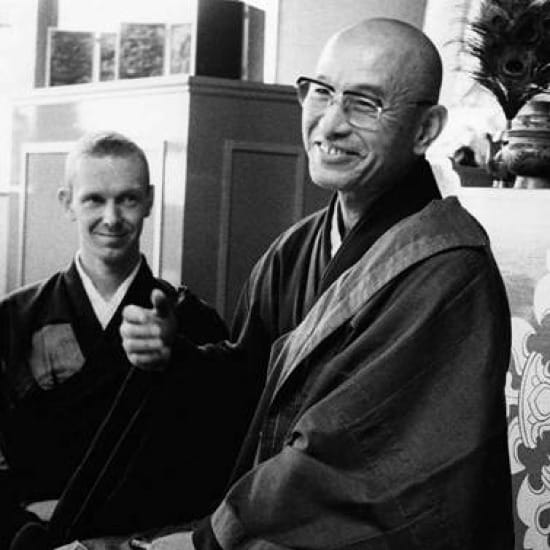
JT: These retreats are very serious. You are meditating about 8 hours a day. Each day starts at 3 or 3:30am in the morning and you have interviews periodically with the teacher to talk about your practice. He knew that I kept traveling to LA to do these retreats and one day he said at 4:00 in the morning or something in one of these interviews “maybe you could find some work to do down here, there are a lot of environmental problems”. My immediate reaction was, "Okay”. A couple of the other big organisations in America had tried to set up offices in LA, and they had failed: the Environmental Defense Fund, the Sierra Club Legal Defense Fund. They both tried and failed.
And I thought, okay, so that's not easy. On the other hand, my Zen teacher asked me to do this, so, okay, let's go for it. I told my colleagues in New York I wanted to do this and for NRDC and they said we'll spot you your salary for a year but you'll get no help from us and we will not allow you to talk to any one of our donors because we don't want you taking money away to set up something. We don't think LA is very important but we want to raise money from LA.
So, I had a year and I went and met with a woman who was very wealthy and at that point I was still living in San Francisco popping down and I told her what I wanted to do and she said, "Well, I could support you, but everyone wants to just come and raise money from us and you know, and then they want to go home and use our money to do whatever they want to do. If I give you a big check, are you going to move here? I had no intention of moving. Maybe one day, but no particular intention. So, I thought, okay, yes, “I'll move on Monday”. And she said, here's US$100,000, which in those days was actually quite a lot of money.
This LA office of NRDC in many ways it's been by far the most important office in the organisation. I was in LA recently and met with my old friend that I hired who's still running it and it's great to see it's still flourishing all these all these years later.
JS: What other people can you mention that helped you as you set up there and get going? Was the Hollywood community, or parts of it, helpful?
JT: The one who was extremely helpful giving significant money and also connecting me up with people was a guy called Peter Morton. Peter was the founder of the Hard Rock Cafe. He had a great series of connections in in Hollywood and in LA business world and he became an important member of the board and helped me find other board members and helped me raise money. He used to invite me over to his restaurant for dinner once in a while. At another table would be sitting George Burns with his cigar, and other Hollywood types. It was a lot of fun because it was the Hollywood restaurant at the time. It's where it's where you went for dinner in a time at which you could eat tortilla chips and smoke cigars at the same time.
JS: There were other elements to your career, states side, before you moved to London.
JT: I had studied for 10 years with the Zen master and lived in the Zen centre of Los Angeles while I was setting up the NRDC office. At that time, I decided to go off and have a sabbatical. I was meant to go around Asia with a very well-known Tibetan master called Sogyal Rinpoche but on the way I studied for stopped to study for a little while with a with a Hindu holy woman in Germany called Mother Meera. My practice started going so deep in Germany that I wound up basing myself in Germany for a year. Near the end of that year I did go and visit the Dalai Lama. A friend set up a private meeting with him and I had an hour with him in Dharamsala.
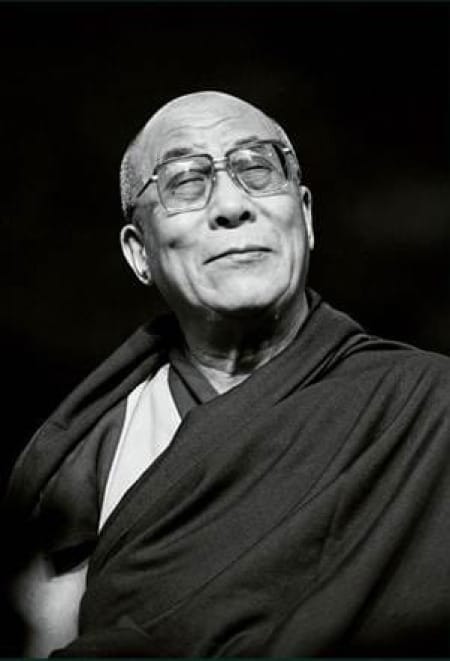
My Zen teacher, my Hindu holy woman teacher and the Dalai Lama all essentially said the same thing. The Dalai Lama said it very clearly in after the hour that I met with him. He said you know your own practice is very deep, you now need to teach other environmentalists and to meditate and so this goes back to your question on philosophy. Philosophy becomes very practical with Zen meditation and it links up with the environmental work in a very deep way.
The Dalai Lama said to me: “You need to teach environmentalists now how to meditate since you are at a stage where you can do that. Here's the reason why you need to teach them to be confident and positive. Because only the confident and positive mind gives us solutions to these problems. The angry mind is not the mind of solutions. We need to you need to help them get beyond the mind of anger into positive solutions”.
So I said okay, that makes a lot of sense. He put it very clearly. The Dalai Lama is good at saying things in a very clear way. I thought that, for me, that was a great revelation. I went back my Zen master in LA. I said, I have this great revelation from the Dalai Lama. My Zen teacher listened patiently and he said, yes, of course, that's Buddhism 101. And yes, it's a good idea. Do that. So then I set up an organisation and ran it for seven years called Positive Futures. Positive Futures brought meditation practice to environmentalists and also to other social activists in United States.
I did a survey of what people were thinking and doing. Of one hundred environmental activists, every one of them was angry. That's what I got. Every single one of them. And I knew that I certainly had been very angry and still can be angry. But I said, "Okay, so there really is a call for this." I set that up and ran it for seven years. Other people then started setting up similar practices once I started doing that. The environmentalists said this is too crazy. We can't meditate. It's too strange. When we go to Capitol Hill and we're testifying in front of the Senate, these Republicans are going to tear us apart if it's known that we're meditators. Who do you think you are? Ram Dass? Now Ram Dass was in fact a friend of mine, a great guy. I made it acceptable to meditate and started with the thought that by doing I thought well if I do it at Harvard, then it will be okay.
So I got a group of people in Boston from Harvard to do it and then moved it out to other circles of people and did that for seven years and by the end of seven years I decided I could say well there are enough other people doing this that it's a success. People are now feeling like they can do this and a bunch of foundations were putting quite a lot of money into it.
I also documented that people were getting positive ideas from this and positive ideas that they didn't otherwise have or probably couldn't have otherwise gotten. The next phase for me was helping a bunch of scientists set up a neuroscience institute to investigate the medical uses of hallucinogenic compounds. And there had been some preliminary work in the 1960s but Timothy Leary and my friend Ram Dass had gotten in the way by popularising casual use of LSD. It had all become illegal and the medical community wasn't going near it. But the neuroscientist came to me and said, "You're a lawyer.
It seems to be able to do cool things nobody else can figure out how to do. Can you get permission for us to use these compounds for two reasons. One is because with our new techniques, they will let us see how the brain actually functions because anything that makes the brain work like serotonin. Serotonin analogues are all hallucinogens and indeed serotonin is hallucinogen. If your brain ran on something else and you were to take serotonin, you'd have a psychedelic trip, which is very interesting. And the other thing is we think that there are uses of these things that were only beginning to be explored and now science is more advanced. There's a much longer story but I did. Now Michael Pollan has done a popular book about this.
A lot of what he covers is all possible due to the basic science that we set out at the Center and the idea was to create the opportunity for lots of scientists to work on this and hopefully for these compounds, once safety was proved, to begin to use them in therapeutic practices. Now 30 to 35 years later it has become a global medical movement. Even the NHS in the UK uses some psychedelics for medical treatments.
That was the second career I had in between spells in environmental law.
JS: One more question about being an activist in the US. Your position naturally is to be open to other activists, following other causes. But it can't always be easy. Can you recall particular challenges?
JT: Honestly, in the United States, it was pretty easy. I used to do a lot of litigation and I would represent other groups. I was the lawyer. I did cases that involved Greenpeace and the Sierra Club and local environmental groups. That was all pretty easy. Once I came to Europe, I found it wasn't very easy. There was a tremendous amount of competition here that I never saw really in the United States. When I wanted to start ClientEarth from the UK, I talked to a very senior barrister. My method is to go around and talk to everybody to learn about a field and learn about what the options are and learn about what needs to be done and hopefully make friends. But when I got to the this very senior barrister who is still doing a lot of environmental work, he’s a law professor and a very smart guy he said, James, let me tell you something about the UK that you may not know. What you'll find is that the any group that has lawyers associated with them will smile to your face and stab you in the back and do everything they can do to prevent you from succeeding. I said surely you exaggerate; it seems like a friendly country and he just smiled and said “You've been forewarned”. I won't name names or name organisations, but that road map certainly turned out to be partly true.
When I founded ClientEarth, there was a fair amount of that. But it grew quickly and I had a big team. When these sort of things would happen, I would tell my staff who were often surprised by it because they came from corporate law firms and weren't used to this particular type of competition. I would routinely tell them: so this has just happened and they've kicked you in the teeth. Okay, here's what you do. You smile right back and start all over again with them until they stop kicking you in the teeth. Eventually, they'll work with you and that's what happened but you had to be quite patient and you have to establish yourself as an equal organisation and then things got friendly. But not so easy in the beginning.
JS: Looking at the span of work of ClientEarth in the in the litigation sphere, what would be the notable victories and changes that you helped co-author?
JT: Now, there's a very long list. What I was always trying to do was to create new strategies for accomplishing big things in the world and new strategies that would work but they would work much beyond a single case. You would try and create systemic change by finding a lever that you could pull successfully and then and then replicate and create ripple effects.
But I had to demonstrate, since nobody had done this work before in Europe, that citizens could bring litigation and win. That would be game changing. And so I analysed all the European laws. I became an England and Wales lawyer. I analysed the EU legal system and spent a doing all of that become becoming qualified and system looking for where you would start if you wanted to bring a high impact case that you thought you could probably win and would have significant benefits for people in the environment.
I settled on air quality because the air quality in the UK and the EU was far worse than the United States, largely due to diesel motors in Western Europe. There was then also quite a lot of coal in Eastern Europe. The EU at that point said that 400,000 people a year in Europe (and the UK was part of the EU at that point) died early of air pollution every year. Quite significant. Here we had a real problem and the air quality law looked like one that was enforceable by citizens and you had a chance of winning because there were quite specific numerical standards and there was an obligation to report against the standards and there was an obligation to achieve standards.
I said to myself, if any if citizens can win any big environmental case, it will be this one. So with my team we brought a case and it went up to the Supreme Court of the UK and we won. And then we structured it so that the Supreme Court of the UK was obliged to ask a question to the EU court and the EU court gave a judgment as we hoped that would be binding on all EU member states. We won in the UK and the Supreme Court wrote an injunction to require the government to do better. In London, the air quality, I read the other day, is about 20% better than when we started that case and we were able then to go to all European states when we got the EU judgment.
We were looking for high leverage and went to Germany, where the diesel motors are actually made. We brought cases immediately in the home of the German motor industry Dusseldorf, Munich, Volkswagen, Porsche, BMW and Mercedes. We won those cases. We got judges to ban diesel cars from going into the centre of Stuttgart, Dusseldorf, Frankfurt and Berlin. People freaked out and stopped purchasing diesel motors.
Diesel car sales went down 20% in the year after that. Here we had a systemic impact. Then we took the same cases all across the EU. I think it's 20 countries now. In every one of those cases we got injunctions forcing cleanup and the air is now significantly cleaner than when we started the project. So that's a long story but it illustrates the type of case and it illustrates that it was the first case and illustrates the way you can use litigation to try and move the system and have market impacts as well.
My view is, you start with the science. You build the policy. You go to legislators to write the law, you help ministries implement the law and then step six is litigation. But when the laws aren't there already, laws for air quality that weren't being implemented, you can start with litigation. If you win, you get respect, so they'll talk to you. Be friendly after you've won the case.
I asked the scientists at the very beginning: If I could do one thing you know what could to stop climate change, they said you should stop all new building of coal plants in Europe. At that point I had like a team five people and I said, "Okay, let's do that." So, so we started in the UK and helped stop a couple of big coal plants in the UK. And then looking out across Europe, Poland was the place that had the most on the drawing board, something like 30 up to 30 new coal plants. So, I founded an office in Warsaw with amazingly good lawyers and started this litigation against coal program there and they stopped the entire new generation of coal plants.
We worked with all kinds of local groups in Poland and farmers who didn't want coal plants near their fields for obvious reasons. Then they started shutting down the existing coal plants which is still going on. Using litigation speeds it up a lot. The idea, of course, is to make the world safe for renewables. We had to stop them to make the space open for renewables, which the EU then stepped into nicely and has been one of the leaders outside China in building renewables. The EU and the UK have been good at that.
JS: Whilst you were CEO of Client Earth, you began what has become a unique relationship with China, I think at their instigation and invitation. Summarise those initiatives.
JT: It's a very long story which I will tell in my book coming out next year. The initial contact was made by the by the China side and they invited me to come over to work with their Supreme Court to write a law to allow citizen groups in China to sue polluting companies like I did in the West. I did it in America, I did it in Europe, I sued countries as well and I did sue polluting companies. And they said, "You, if anyone will be able to help us design a law to allow Chinese to do this because nobody else has done it on two continents." So please help us. So I went and met them, helped them write that law and then after that I went back to at their invitation to see how it was doing and the members of the Supreme Court asked me to train them and other Chinese judges in how to decide environmental cases because they had just created 3,000 environment court judges. Nothing like this exists elsewhere in the world. In the UK, there are no environment court judges. In America, there are no environment court judges. There are a couple in Sweden, as far as I know and maybe a couple in France, a few in India, a few in Australia. Those are the ones I'm aware of. There may be more now, but there aren't many.
In China, they started with 3,000 environment court judges and there's up to 10,000 now. The team that I helped build in Beijing has now trained more than 1500 of them. It’s 10 years of work now. In year two or three, the prosecutors came, the federal prosecutors of China and said, will you train us now to bring environmental prosecutions? We did this, also bringing in experts from all over the world as we did with the judges. Last year, the number two prosecutor came to visit the office in Beijing when I was there and said that they had now completed as a result of this work and this new way of behaving and this new concept of what they call environmental public interest litigation. It's interesting they see the prosecutors bringing public interest litigation. That's what they call it because it's in the public interest. It's to clean things up. They said that, as a result of all this work, they are at the point where they have now completed 500,000 environmental enforcement actions. It's astounding.
JS: Astounding, yes. They’re would not have been 500,000 in the history of the rest of the world.
JT: I think not. China then invited me to be on the Politburo's environmental think tank. It now scrutinises Chinese investment, at least government investment. They are looking at Chinese investment in some 115 countries, mainly the Belt and Road Initiative, and scrutinising such investment for the purpose of seeing whether it can be made greener. We helped convince them to build no coal plants in any of these countries and that knocked out 190Gw of coal which is quite a lot of coal and then many others made the same argument but we were part of that discussion and then they're now interested in instead putting in renewables and ClientEarth helped facilitate a deal between China and Indonesia. We were one of the people that helped create this US$54bn dollar investment in renewables in Indonesia which is very important because Indonesia has been heavily reliant on coal traditionally.
The work is to help them accelerate what they've already decided to do because they have made a fundamental decision to build a green economy. They are already a superpower. But they're a different type of superpower in that they've bet the house on becoming the first green superpower.
Whether it's working with the judges and prosecutors to help them bring cases to clean up China fast because it was in terrible shape and they knew it. They wanted to come up to European standards of environmental cleanliness and performance ASAP. So that's one example of going green. You have to teach all the companies that they can't get away with it and they must come up to the highest standards that the law sets.
JS: Within China, the Yangtze River has a totemic significance historically and also in its modern industrial phase. Point out a couple of initiatives going on with respect to that very large expanse of water.
JT: It is very large. I’ve just been thinking about for the book I'm writing. The Yangtze is roughly the same length as the distance from London to New York. The Yangtze River basin is about as big as Western Europe. It's made up of 11 provinces which are average size of Great Britain. You begin to get a sense of the scale, the ancientness of it.
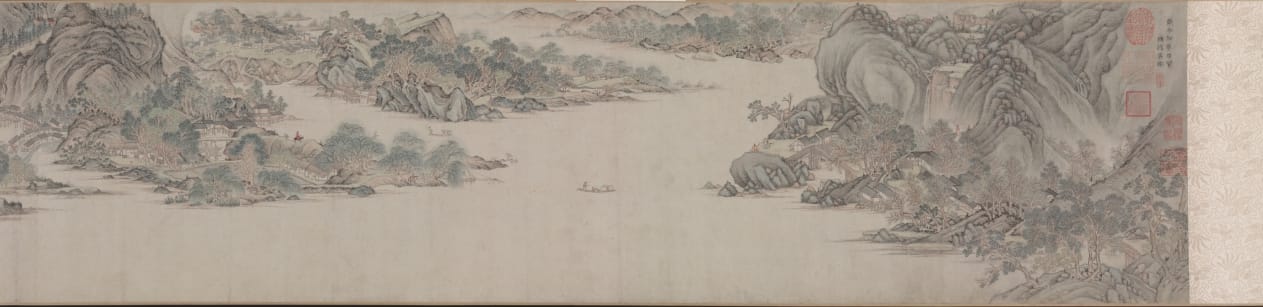
In the 13th century, when Marco Polo visited, they were already burning coal. We weren't burning coal in the 13th century in the UK for industrial purposes. They were already ahead in energy technology in the 13th century. Marco Polo came back to Europe and said, "They're burning these black stones. And they work really well.” They do work really well, as we know. They were using to make iron in the Yangtze River basin and they were making a 100,000 tons of iron a year using coal.
So it's been industrialised for a long time. It's always been the biggest population centre, right now it has something like 45% of the population of China. So that's 100 million more people than the United States live in the basin and it's about 50% of the GDP of China. You get a sense of the people and the population and the density and the age of this and of course the environmental harms as a result. Particularly starting in the 1960s when they wanted to rapidly industrialise and then you had all of these factories producing steel and everything else with almost no controls. So, in terrible shape. Suddenly the fisheries collapsed and the fish that were there were too toxic to eat.
In 2018, the Chinese wrote into their constitution something called Ecological Civilisation and the idea is to green everything so it's permanently sustainable. And then the first big restoration project under this new concept beginning in 2020 was the Yangtze River Basin Restoration Programme. We're five years in. They started by banning fisheries fishing to try and let the fish recover. They what I'm reading is that they compensated the fishermen reasonably well and retrained a lot of them. So, they didn't just take 200,000 fishermen away and throw them into no employment. That had been a problem earlier with development projects, but the new one they're trying to take care of that. People have been reasonably well taken care of or at least the attempt they pulled back all the polluting industries to at least a kilometre away from the river and put new they're rebuilding factories and with very high standards of emissions. And that's well underway.
They set up two courts that only deal with cases about protecting the Yangtze River Basin, the Yangtze River and the River Basin. They're also restoring the riparian areas, the wetlands and the forests which were which were denuded on the mountains so that you would get a lot of silt. Restoring the basin requires restoring the mountains, requires restoring the river, requires pulling all the industry back, requires repairing the riparian areas and the wetlands across 11 provinces.
As far as I can tell it's by far the largest restoration project that anyone's attempted and they're really going after it. It's producing results. The river is much cleaner. I know you're interested in AI. One of the first things they did was to build a digital twin of the Yangtze River. And it's linked up with thousands of sensors and drones and they can watch what's going on in terms of illegal fishing or illegal sand mining, which was a problem. There are thousands of sensors in the river, so they're monitoring in real time the pH, the acidity of the river, the turbidity and so on. And that allows them to try and understand the needs of the remaining organisms in the river and try and enhance their life cycles. They've reintroduced sturgeon which were endemic species which had been declared extinct in the river and they seem to be willing to spawn again.
My main point is imagine the ambition of this. Imagine restoring all of Western Europe at once. That's the scale and integrated thinking of doing all of these different aspects and combining all of these different technologies, passing legislation, creating courts to enforce the legislation. The scale and complexity of the undertaking and it seems to be working from what I can gather. They're seeing very positive results in year number five. And you would think this would take generations to do anything as it might in Western Europe. In China, they are getting on with it. So, I'm studying it. The short takeaway is that, if they can succeed in restoring the Yangtze River Basin given the scale of the population the history of industrialisation and the damage, then you can succeed in restoring anything anywhere.
JS: You have been appointed Visiting Professor at the Smith School of Environment and Enterprise. Could you introduce the Smith School, how it began and what it aims to do?
JT: The Smith School is celebrating its 20th anniversary. It's a relatively new institution at Oxford University. It was it was set up by Sir Martin and Lady Elise Smith. They have devoted a lot of their philanthropy to music over the years in very major ways. They had a discussion 21 years ago, let's imagine, with their children. "Well, music is very nice. But if there's no civilization, there's no music. So, why don't we actually do something to try and protect civilization?" Out of that initial impulse grew the idea of setting up what was, I believe, then the first institution that would look at the interconnection between enterprise and environment to try and imagine ways in which - finance in particular - but all aspects of business and industry and enterprise could live more sustainably. Although they didn't use the same terms, it was a similar inspiration to what the Chinese are trying to do when they imagine ecological civilisation.
Essentially, they've set up an ecological civilisation school. How do we bring the elements of capitalism, industry and enterprise together with sustainability in such a way that we actually meet the interest of the market so that people will adopt this stuff that we imagine. It's not just a hypothetical exercise. An example of that would be that this week I'm going up to Oxford to be one on a panel in a program that brings in 60 partners from 60 law firms around the world who are engaging with the law program there. Imagine how they can bring environmental arguments into their advice for environmental information, you could say and understanding of environmental risks, you might imagine to their clients, but then also to do pro bono work on regulations and litigation. That’s a very good example I think of how the Smith School tries to be very practical.
JS: You are raising money for initiatives that you will mentor. Give a little summary of the objectives that you are putting in place.
JT: Now that I have stepped down as CEO of ClientEarth, and my time is my own, I wanted to extend the China work into a new dimension. In China, we're working with Chinese, as I mentioned, on enhancing their activities and speeding up their greening. What I want to do at Oxford is to set up a platform where Western scholars and experts can study Chinese advances, whether that's in batteries or solar or finance or the Yangtze River Basin restoration. Study Chinese advances so that we can adopt ideas that are useful to the West and give them Western characteristics. This has a very practical aim of saying if we have Western experts who aren't in any organised way studying Chinese advances, what can we learn to prosper more and to improve our own economies and speed up the transitions that we need to make to a sustainable society. So that's both the both altruistic and very practical inspiration here.
The program is just beginning and we have our first funding in but we're right at the beginning. This new program at Oxford can have a similarly scaled impact in if we can really open some of the best minds in the West to some of the best advances the Chinese have made. What can we learn from them to speed up our own adaptation to the coming changes that that could have an enormous catalytic effect on what the West can do.