Ian Mill KC interview
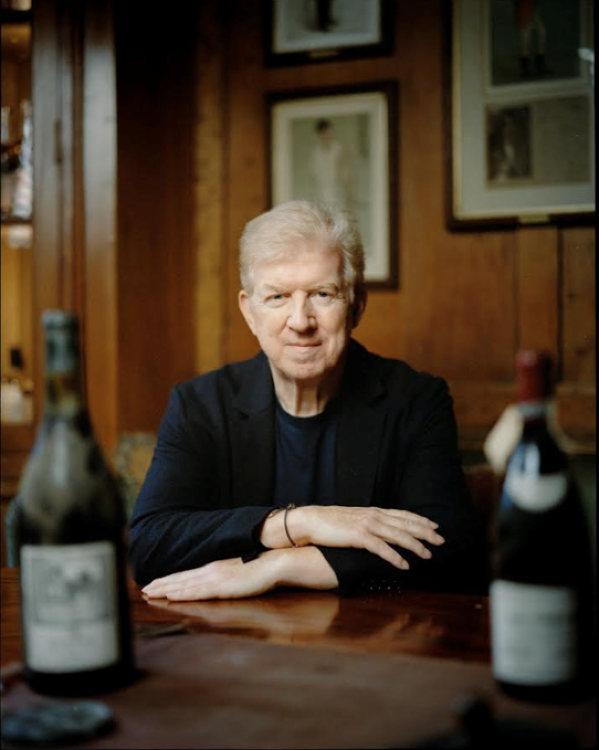
Ian Mill is one of the world’s leading barristers in sports and entertainment. He has practised at the bar for 45 years and remains highly active as his case list here indicates https://drive.proton.me/urls/T4C30149T0#8HS1Qh3x0VhB. The span and fame of the recording artists and bands he has represented is so notable that we created a playlist of them which can be found here https://open.spotify.com/playlist/20Zdt4iFFsqa99ZWR41Hjs. The playlist runs chronologically from Bob Marley to Dua Lipa.
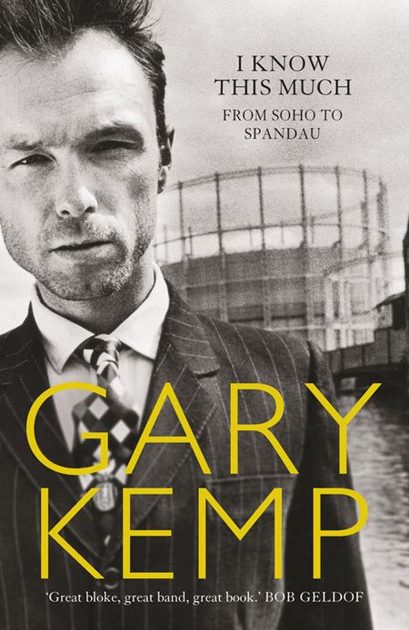
Gary Kemp, of Spandau Ballet, describes the day in 1999 that Ian acted on his behalf:
“Ian Mill fills the room. Not just physically – he has a large, well-stocked frame, a picture of his own success – but also in terms of his character – a Pickwickian presence born of public-school confidence and class. ‘Spy’ should have drawn him for a Victorian issue of Vanity Fair. He picks up a handful of folders from his aching desk, buries them into his obediently open briefcase and, with a swipe of his hand, clears his barrister’s wig from the table, places it on the top of the folders and closes his case with a snap.
‘Gentlemen?’ I wonder if he’d put the tonal question mark after ‘Gentlemen’ for other, more suspicious reasons. Here, in the theatre of law, stands the last bastion of the class system. Accents are prepared and nurtured, polished and loaded, before being sent out to pronounce judgement upon the fools of the world.
I gaze through the window on to the red-bricked Inns of Court, survivors of the Great Fire of London and the Blitz, serving as historic reminders of the eternity of order. I find a certain comfort in all of this, and a genetically encoded forelock is being pulled as Steve Dagger and I follow Ian and our team out of the chambers and into the cold bright day that lights the Inns with a nostalgic beauty.
As we walk towards the court, I feel myself locked into a crashing inevitability and envy the otherness of passing people, on their way to meetings, coffee, loved ones. But Ian bestrides the Strand and it’s all I can do to keep up. We are about to enter his arena.”
I met Ian Mill some years ago through friends in common, Akiko and Ken Freeman, who are wine makers based in Sonoma where Ian has a second home. Ian is tremendous company and a transcript does not do justice to his generous sense of humour nor much of the performative cadences that Gary Kemp picked up on in his wonderfully well written book.
Ian’s passions are his clients, chambers, advocacy, wine, his family and Arsenal Football Club. On the day I interviewed Ian, Beth Mill had prepared a shepherd’s pie which immediately got us into a few Keith Richards stories. His autobiography, Life, is also a great read and shepherd's pies feature toward the end.
Our conversation finished at the moment that Beth stepped into their flat, the pie was extracted from the oven and Ian opened a bottle of Joseph Phelps 1976 cabernet. That particular year was to prove significant for Californian wine makers.
In the conversation laid out below, the many famous names referenced serve to exhibit the cycles of dispute, contention and resolution.
If you enjoy these interviews and reflections, please send this article on.There is a subscription box, which is free, and requires only an email to receive future articles.
JS: We start with the early life of Ian Mill. What were you interested in when you were 10 years old?
IM: When I was about 10, I became an Arsenal supporter. As a prep school boy growing up in Surrey, where there was no decent football team, I had to choose a team I became an Arsenal supporter because of a football card promotion being run at the time by Shell, under which you were given a scrapbook, into which you inserted playing cards which you earned by buying petrol. All the First Division clubs were included, but Arsenal came first — it was done alphabetically. It was the front page of the book, and it was also the first page that I completed. So Arsenal it was, and it's been Arsenal ever since.
Then, at the age of 12, I decided I wanted to be a barrister, which was absurdly precocious. I watched a drama series on television called Justice. It was set in the northern courts, dark, pompous, formal, with a female barrister lead, which was quite unusual back then.
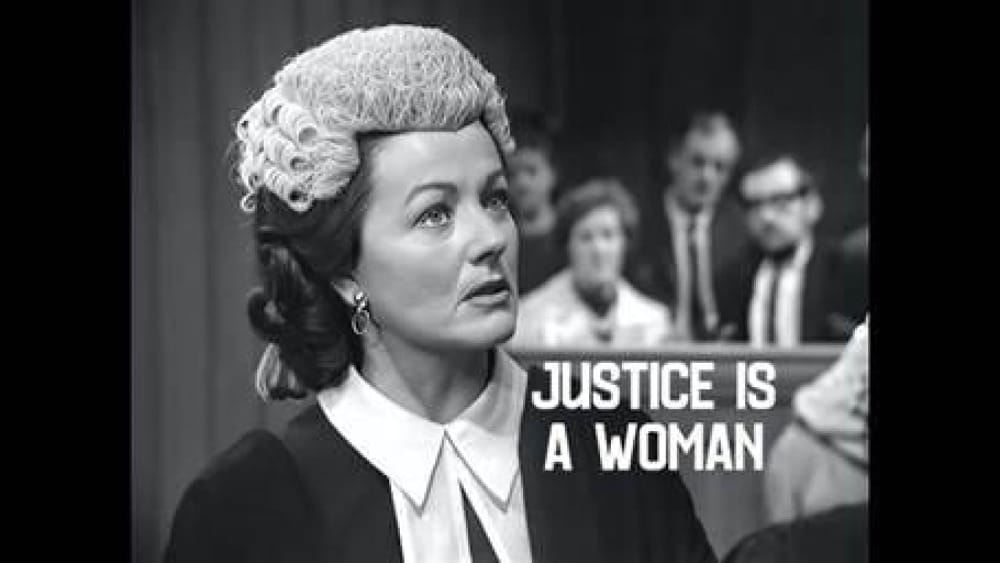
Margaret Lockwood was the name of the actress. There were three things about the series that I liked, aged 12. The first was the silly dress. My prep school in Surrey was founded by a Scot called Richard Grange and he required everyone who was entitled to wear the kilt, to wear the kilt. My father was a Scot, so I wore the kilt to prep school.
So silly dress was something I was quite used to at that point. Secondly, I loved the formality, the very structured set of rules which governed what went on and was allowed to go on in the courts. But most of all, it was the power of the barrister to compel the witness to answer the questions that he or she did not want to have to answer. I think that's quite peculiar for someone of my age. But it just fascinated me. I've been in practice as a barrister for 45 years, and cross examination remains the aspect of my career that I love most about being a barrister. I chose that at 12. I never deviated.
JS: And did that mean it presented itself what you should study at university?
IM: As a practical matter, I had to get through the bar exams that I needed to pass for qualification, and there were not the post-graduate courses that are available now. So I had to do my law part one at Cambridge. But rather than do the full law degree course, which I didn't need to do, I decided to do classics first.
Richard Grange was a classicist. I started Latin at the age of eight and Greek at the age of nine, and I really loved them. So I did part one in classics. What I actually wanted to do was to go to Oxford and read Mods and then Jurisprudence, but Oxford did not permit that combination.
I went to Trinity Hall, which was a canon law foundation back in the 14th century. And I'm delighted that I did. I made some great friends there, many of whom I still see regularly.
JS: And your study of classics — do you favour one over the other?
IM: Greek over Latin. I found it the more beautiful language. Latin I found rather more prosaic.
JS: Do you find yourself passing notes in Latin or Greek?
IM: I fear my memory is not good enough for that. I enjoy going back and reading classical materials in the English language. It's beyond me to do it in the original now.
JS: Did you have any unusual or interesting placements or part-time jobs whilst you were a schoolboy or a student?
IM: My favourite one was in a club called the Epsom Club. Epsom Downs is where I grew up. My father was a member of this club.
The club was populated mostly by local self-made businessmen. It was also full of snooker tables. When the barman went on his summer holidays, I would come in and take over.
I loved the members. They were absolutely joyous people. And I became quite good at snooker. They adopted me as one of their own. I became a sort of honorary lifelong member of the club.
JS: Did you create cocktails that are no longer popular?
IM: I don't think I did, because if I had done, they would've been unpopular. These were guys who enjoyed a gin and tonic and a pint of ale.
JS: Who was the first person in law that you were somewhat inspired by?
IM: I had nobody to inspire me as a child. My godfather was a solicitor, but he was a family solicitor. He thoroughly endorsed my choice of career, but that was as far as he could go. The answer is that I met the most remarkable person when I first started out as a pupil barrister.
I had the privilege of being the pupil of a woman called Barbara Dohmann, who is still a member of our chambers. She came to the bar having had previous careers, including one as Willy Brandt's interpreter at the UN.
She had been the pupil of a man called Anthony Lester, later Lord Lester, now sadly no longer with us, who was largely responsible for discrimination law in this country. Which was ironic because he spent his time telling Barbara that there was just no way that a German woman could succeed at the English commercial bar, which is what she wanted to do, and that she should look elsewhere.
She refused to accept this advice, and she effectively squatted in chambers, picking up work until eventually the chambers said, "Look, this is ridiculous. We'd better give you a tenancy because you're actually doing just as much work as we are." She ended up becoming the head of the English commercial bar.
A formidable opponent. Immensely bright, hugely articulate, passionate about her clients always. She's a legend, and I had an extraordinary year learning from her. I'll tell you what happened with my first piece of work I did for her. I had to write an opinion.
It was rather lengthy, and I wrote it in longhand, that's what you did back then. This was 1981. I handed it to her, and she read it. She took a pair of scissors, and she cut underneath the heading and stapled it to a separate page. She then threw the rest in the bin.
As she explained to me, your clients are not paying you to be told there's 100 fascinating cases, 50 saying one thing, 50 saying another. They want to know how to win. They want practical, strategic advice. My academic legal learning went into the bin alongside my opinion.
JS: The area of law litigation and advocacy that you've come to specialise in, was that a recognised specialisation when you started or something that evolved?
IM: If I'd been asked at the start of my career what would be my ideal areas of practice, I would have said music and sport, because those were aspects of life that engaged me particularly as a child - and they still are. I think I'm very well-suited to them because I share an interest in their subject matter.
The world of sports law is one that has evolved dramatically since I came to the bar, and I've only really been involved in it for the last 25 years. The money that is now involved in professional sport breeds disputes and breeds regulatory issues.
Music was always a possibility, but I had not studied intellectual property law and many music disputes involve copyright issues. So I thought maybe that was not going to come my way.
But what happened was, one of my colleagues in chambers took silk, and the solicitor involved in a music case he was doing at the time said to my clerk, "This case doesn't warrant a silk." This was a case between Shakin’ Stevens and his former manager over some demo tapes. I was given the opportunity to take over the case and got on like a house on fire with the solicitor, who was the most extraordinary man.
He looked completely bizarre. He had bushy eyebrows, rimless spectacles and would wear a bow tie. He may have looked completely ludicrous, but he was utterly brilliant. He had no academic degree, but he had the best strategic grasp of what argument would win a case of any solicitor I've come across. He and I got on incredibly well, and he then introduced me to the other solicitors who were good in the same field. Rather than keep things to themselves, they met and shared them.
So I suddenly went from doing no music to pretty much only music It was a revelation. I loved it and I still love it.
My second music case was acting for the Fine Young Cannibals.
JS: What were they seeking?
IM: There was another group called the Cannibals. They tried to stop the Fine Young Cannibals from calling themselves the Fine Young Cannibals on the basis of passing off and their existing reputation. Anyway, we had a motion in front of a thoroughly irascible chancery judge called Whitford.

And I managed to show Mr Justice Whitford enough material from pornographic magazines featuring stories about the Cannibals, that I was able to persuade him that they had no reputation to lose. And so the case got thrown out. And the Fine Young Cannibals went on to appear the next week on Top of the Pops.
The two biggest cases that I did as a junior barrister were for The Stone Roses and for George Michael. We got The Stone Roses out of their one-sided and unfair publishing and recording deals on the basis that they were in unreasonable restraint of trade, and therefore infringed a rule of English public policy.
We used the same argument for George Michael, who wanted to get out of his contract with Sony because Tommy Mottola, the head of the US Sony company, had become besotted with Mariah Carey and had put all his care and attention into her new album release whereas George's new album, Listen Without Prejudice, deserved much greater attention than it received.
And he was outraged by that because he had achieved huge things in the American market with his previous album, Faith, which had even won Black Music Awards. His instructions were: "I can't stay with this company. Find a way out." So we tried to find a way out, but at the end of the trial, we failed.

And I think the moment when I knew that was going to happen was when the quite brilliant barrister on the other side, Gordon Pollock, asked George to write down on a piece of paper how much money he was worth. And the very gentle submission that was made following that was that it was difficult to justify an argument that you were contractually enslaved - one way of looking at a restraint of trade argument - when you've earned that amount of money. It was legally misconceived as an argument, but very attractive nonetheless. We were going to go to the Court of Appeal, and we might even have won there, but then DreamWorks decided George was to be their first artist, and so they bought him out of Sony for the US; Virgin bought him for the rest of the world. By that stage, sadly, George had lost the love of his life, Anselmo, to AIDS, and he was a somewhat sad figure thereafter.
He was a lovely man, very bright on the things that mattered, a bit hysterical on things that didn't matter. But he was always very respectful, and we spent about three months together in court. It was a great case.
JS: You were called to bar in 1981 and took silk in 1999. And you're still working. Looking at the whole period of your professional life and the areas of law in which you principally operate, what are the most profound changes in the areas of your specialty?
IM: Of the areas of law in which I practise, it is the field of sports law that has transformed most over the last 20 years. In particular from a regulatory point of view, there is much more emphasis on dealing with doping, corruption in sport, and a lot more money is invested by the governing bodies in trying to keep a handle on that.
I've been quite involved in that. In particular, I sit as an anti-corruption hearing officer in tennis Combatting corruption is, for me, the most important thing. Gambling is not, I think, something which is particularly healthy in a sporting environment.
There are various negative aspects to it, but undoubtedly the most pernicious is its use in connection with match fixing. There are criminal gangs internationally who are making ridiculous amounts of money in that context. And we need to do everything that we can to try and stop that.
JS: I was at Lord's on the day of the England-Pakistan test, where the young Pakistani bowler, Muhammad Amir, overstepped by about a yard. It didn't look right in real time.
IM: No, it did not. And that was a shocking case. I did one, acting for the ECB against another Pakistani cricketer called Danesh Kaneria, who was a spinner. We got him banned for life. He only eventually admitted that I was right in what I submitted about 15 years later. But in the meantime, he'd destroyed the career of a young man who was an Essex bowler, Mervyn Westwood. He was someone who couldn't make it into the first team, was in need of money, and was persuaded to take some cash in return for bowling a particularly bad over in a match in Durham. He was groomed by a senior international cricketer, invited here to play in our County Championship.
Westwood had to go for a certain number of runs in the first over, which he achieved by a series of no balls, wides, and long hops. He couldn't live with himself, and he ended up telling his teammates what had happened, and spending time behind bars in consequence, which was terribly sad.
But he did come and give evidence and make sure that Kaneria didn't play international cricket again.
One thing is betting on outright results. But of course, betting's become fractional, where you can bet on multiple events within matches. There is a crossover here between different areas of my practice. This is because the reason why such in-game betting happens is rooted in the idea that data of that type can be monetised. It's monetised through intellectual property rights. And so owners of stadia, for example, prevent betting companies from coming into their premises to access that data, instead requiring them to pay for the use of that data so that it’s available for betting shops to offer in-game odds to their punters.
I don't like it. It's artificial in the extreme. Take the case I have just done in tennis — a typical example of what is now being done. An umpire, not a participant but a trusted official, was persuaded to introduce within the course of a match “false deuces”. Bets were placed on there being a deuce at a particular point in a particular match — say, the third game of the second set. So if there was in fact a deuce, that was fine. But if there wasn't a deuce, the umpire had to input falsely that it was deuce into the machine which he has, which is the basis upon which the betting offices operate, not on the basis of what's said by the umpire on court. For God's sake, how ridiculous is that? But you're right. These absurd little bets, they're limitless.
JS: No wonder so many people are addicted. So back to Blackstone Chambers, where you've spent your entire career.
IM: It wasn't called Blackstone Chambers when I joined it. We were at an address in another part of the Temple called Hare Court, number two Hare Court, but we ran out of space.
When I joined chambers, I was the 19th tenant. We now have, including non-resident members, about 130 barristers, and that's been achieved almost entirely through organic growth. We've done some what are rather unattractively called lateral hires, but we don't like doing that typically. And the other thing is members of our chambers just don't give up. They keep going, like me, like Barbara.
JS: In your time there, part of those years you operated as co-head of chambers. What extra activities did that confer upon you?
IM: I think the first point to make about that, James, is that this was, has been the greatest honour of my professional life. I never wanted to be, and never will be, a judge. And so to be the head of what is, in my unvarnished, unbiased opinion, the greatest chambers at the English bar, it was just an honour beyond compare. Over the seven years when Tom and I were co-heads everything was, by and large, smooth sailing.
There were two aspects which were difficult. One was when our senior clerk left in circumstances which must remain unspoken of, but it was difficult because Martin had been my personal clerk for almost 20 years at the time, and it was a sad moment. The other was, I hadn't expected this, problems in the lives of friends and colleagues, which could only be discussed amongst those who needed to know - in many cases, just the heads of chambers. And having to manage and deal with the consequences of unfortunate things going on in their lives was not something I expected to have to do, and I found that most difficult. But overall, it was a wonderful experience.
What did I do? It was partly internal but partly external. You represent chambers externally. Events, conferences, that sort of thing. You are the outward face of Blackstone Chambers, and it's very important that you do that conscientiously and vigorously, which I like to think I did.
JS: For a reader who does not readily know how chambers are constituted and how they work, is there an analogue or an analogy in the outside world, outside of law that you would compare it to?
IM: I think it's very difficult because the business model is one that shouldn't work. We are all self-employed. In Blackstone Chambers now, we're 130 different businesses. In most ways that isn't a problem. You earn your own money, and you pay a share of your earnings to cover the overheads of the chambers. The chambers in that sense is essentially a premises with utilities and employees who manage and administer the businesses of the barrister members.
All pay the same amount of money in terms of percentage of earnings. Those who are most successful pay the most money. That works, I think, because when you start out in practice, you get benefits. You don't pay very much money, and the chambers basically gives you a career by getting you up and running, and you pay that back in proportionately larger amounts over the subsequent years.
The reason why I say it shouldn't work is because of the role of the clerk. Now, a clerk is someone who markets you and does all your commercial negotiations for you. I have never fixed a fee in my professional life. The clerks do that.
So where lies the problem?
The problem lies in the fact that the clerks look after individual members of chambers, but they also have to look after the reputation and brand of chambers as a whole. And that seems to me intrinsically to involve a conflict, because you cannot have, in even the most successful chambers, uniformly successful practitioners.
Therefore, there will be some who are more in need of work and support than others. And it may well be that those are the ones who are not necessarily the best ambassadors for the quality of chambers' work from an external perspective, so that if you have a great case that comes in, new case, new solicitors, when you want to show chambers off to its best advantage, do you choose the person who may not really have the time to do it because he or she is so busy, but nonetheless will do the best job? Or do you choose someone who's got the available time? And somehow the clerks manage to square the circle. Everyone is just thrilled to be in the chambers.
IM: I think our chambers is run even better now than historically. It needs to be because it's bigger. We have weekly bulletins in our inbox which talk about the cases that we're doing and who's been doing it and what's going on. This is important to try and keep a sense of camaraderie. Which was very easy to do when I was head of chambers. We were only about 50, 60 people back then, but it's more difficult with the larger numbers now.
JS: You represented Ed Sheeran in a critical case.
IM: I met Ed Sheeran in a hut in Dungeness where he was writing with a Spanish composer. I'd been instructed to represent him to defeat the argument that he'd copied somebody else's work when he wrote Shape of You.
I sat in that hut for about two and a half hours, and the hut was largely populated by empty bottles of Mouton Rothschild, which was Ed's tipple at the time.
But at the end of the meeting, I said to him, "Ed, I hope you don't mind me saying this, but I think you've got a problem in your life. You've got way too much Bordeaux and not enough Burgundy."
This obviously struck a huge chord with Ed because his face lit up.
And since then we have had a completely different conversation. I have introduced him to the wonders of Burgundy, which as you know is a passion of mine. And I've had dinner with him and his friends, and indeed his father, where we've sampled great bottles together.

JS: The other artists you've been involved with — Dua Lipa, Coldplay. In these cases or the sports cases, have there been situations where you developed a strategy, you had something in mind, and yet something completely different happened, either pro your case or against it?
IM: That happens very frequently. I suppose the problem is that very often I can't tell you about what has happened. But certainly there have been many unforeseen events, which come in from left field, and I just was not expecting at all.
I love that about cases. They're not linear. There are ups and downs, and you just don't know what's going to happen. For example, there are situations where you're all saddled up and going into court and the other side scuttles across on the steps of the court and says, "Can I have a moment, Ian?"
That happens less frequently than it used to, I think, because of the greater prevalence and importance of mediation. The court system effectively now requires parties to mediate during the course of a case. And you can't mediate right at the door of the court because it's a structured process which requires some time. So the process of mediation tends to, not invariably, but it tends to work out those cases which are and are not going to settle.
That said, I did a case a few years ago for the racing industry, which was actually one of those sporting data cases, and it was about whether or not a company was required to pay for getting the data, which it was then going to use for its own commercial advantage. And we had a right old ding-dong at first instance and in the Court of Appeal. There were innumerable issues, and they kept on going one way and the other. And we were going to the Supreme Court, and just before the hearing of the Supreme Court, suddenly the case settled.
Completely out of the blue. And I do not know why that happened. It was going to be my first fully-fledged case in the Supreme Court, and I was all raring to go.
The rug was pulled from underneath me. It also means that the law on conspiracy to injure by unlawful means still needs to be sorted out.
JS: And did you get to the Supreme Court on another occasion?
IM: I've appeared, but in the guise of the Privy Council. So that's the Supreme Court in relation to Commonwealth cases. This was a case which had come up from the BVI, which I'd done all the way up. So yes, I've had that scary experience of appearing in front of law lords.
JS: What can you say about the current music case you're engaged with?
IM: I've got several, but I think the one that you're asking me about is to do with the members of The Police. And I'm acting for the two members who are not called Sting against the one who is. The case is not itself necessarily that fascinating, but the background to it is quite important in understanding the way the music industry works.
IM: The case is about the terms on which the three of them agreed that they would share in the income from compositions written by the others. So the background to this is that if you're in a group and you are simply a musician, you're party to a recording agreement, and you earn money from the sale of records and the like — you can earn, obviously, a good living.
If you want to earn a particularly good living, you also need to be a songwriter whose songs are probably performed by the group of which you are a member. Songwriting generates very substantial revenues. And because it does that, it has the capacity to create schisms and resentments within the group. And over the years, groups have found various solutions to try and find their way through that. So this is what The Police have done, and the dispute is over what it is they actually agreed. That's the way it will be fought out when it goes to trial probably.
JS: What they agreed historically?
IM: Yes, although there is a dispute about how far back the court should go. I had another one which was a case which I thoroughly enjoyed doing, where I acted for Gary Kemp against the other members of Spandau Ballet. Gary wrote all the songs. He took them into the studio. There was no dispute about that.
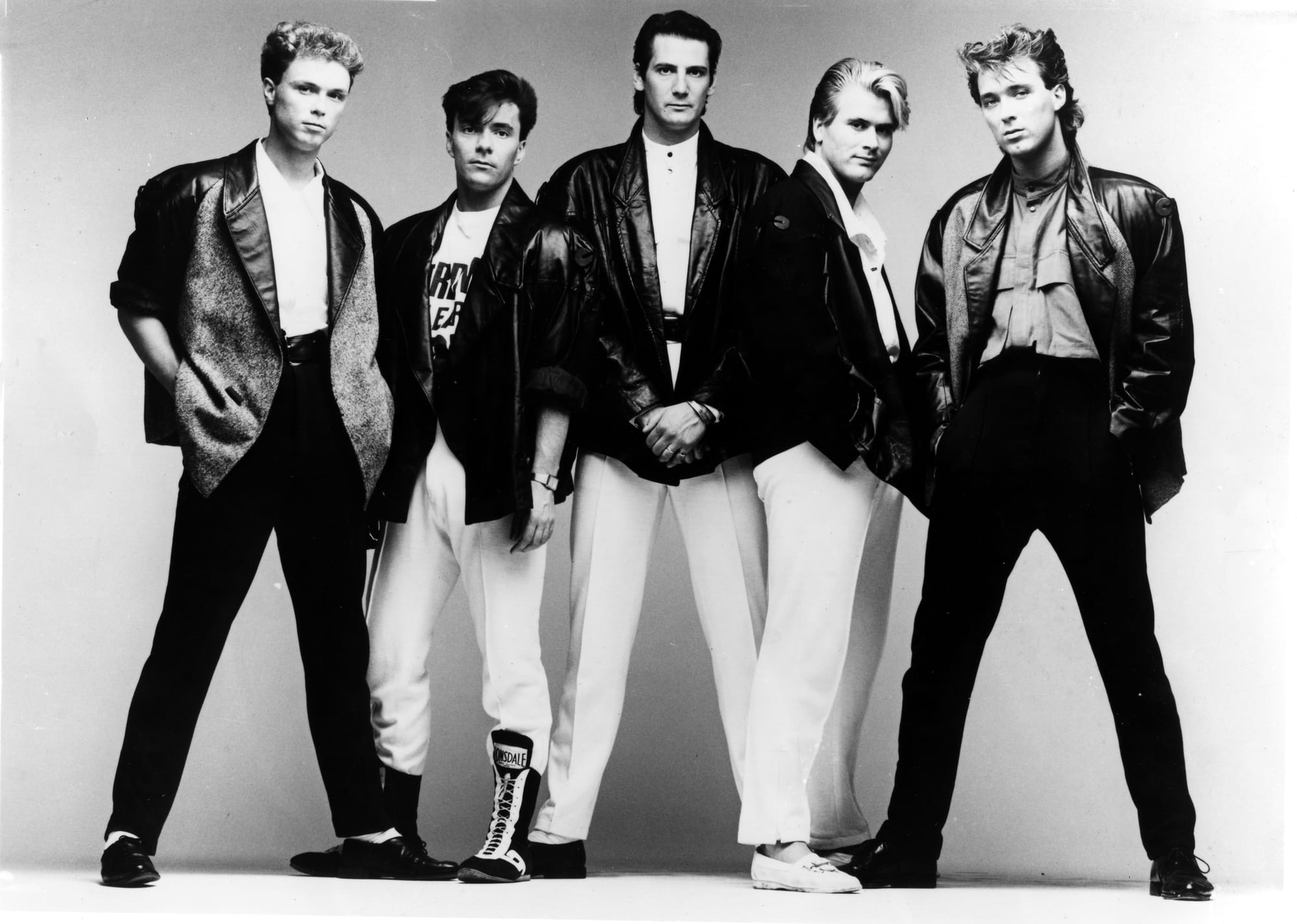
IM: He agreed to give the band half his songwriting and he kept the other half. When the band split up, they sued Gary because he stopped paying them. And the question was, was he obliged to carry on? Which I'm happy to say he was not.
But what also happened in that case, which I think is for him more significant, was that Steve Norman, saxophonist, made a claim to be the co-writer of True based on the sax solo, which if you know the song — you'll know what I'm talking about. It's a memorable performance... It's a bit like Baker Street. Sax solos we have loved.
He said, "Well, look, listen, this is... everyone recognises it, so it's an important part of the song. I should have a share of the songwriting." Anyway, True at the time was probably about the most played song on the radio.
The amount of money that was involved in the resolution of that dispute was therefore massive. Anyway, I persuaded the judge that Steve Norman was not entitled to a share of copyright because his contribution was the wrong sort of contribution.
JS: In a judgment like that, can you trace further cases in the future that referenced it?
IM: Yes. That case has been notorious ever since. And the leading judge on intellectual property, who has always been a great champion of performers’ rights, thinks I got one over the judge, and that the decision is completely wrong.
JS: So, it might be fair to say you're not entirely popular with instrumentalists within bands?
IM: It's entirely possible that could be right.
JS: Have you acted for copyright holders of The Beatles' work?
IM: I've acted against Paul McCartney.
JS: What can you say about that?
IM: Not a lot. What I can tell you about is the topic, which is not uninteresting, which is that under the US 1976 copyright statute, there is a right vested in anybody who is an author to claim back their copyright works if and to the extent that they had assigned them away for more than 35 years.
The point that is the heart of that provision is that unscrupulous people had been taking advantage of young talent and extracting unfair terms under which they acquired rights from the talent. The statute was designed to give the author the opportunity to reset after 35 years. And the reason why this has become relevant within the last 10 years, is that there are lots of massively successful post-1976 songs where publishers have been granted life of copyright rights, and suddenly their writers are stepping up and saying, "I'd like to have my rights back." Only for America. But America is obviously the biggest territory in the world.
JS: Is what Taylor Swift did the same thing?
IM: It's not quite the same thing. What she did was get round the problem of recordings being tied up in the hands of her record company by making fresh recordings. There are different copyrights. There are in any recording that's released, there's the underlying composition and the separate sound recording copyright.
But you can get round the problem of the sound recording copyright by making a new recording. To finish the story on the US rights, I was asked by Sony Music to find a way around this, and we looked at a contract governed by English law with English artists. Obviously there would be American copyrights involved. That was Duran Duran. And the argument that we ran was not that the members of Duran Duran weren't entitled to get their copyrights back. The statute overrode any agreement to the contrary. But we said, "If you promise that you're not going to seek the US copyrights back, because you have promised them to the publisher for the full period of copyright, then you can have your copyrights back if you ask for them but you will have to pay damages because you've broken your promise." Which was a way of effectively negating the value of the right. That landed.
JS: With all your experience, if you'd met the Beatles in The Cavern back in the very early '60s, and they were clearly a band that were going places, and if you were advising all, what would be the advice you'd give to a group of artists?
IM: Try to find a record company which is prepared to invest in your careers but does not extract unfair restrictions in return. There is, for record companies, a balance to be struck, and I'm not sure it's ever really been adequately struck, between on the one hand not tying an artist up for undue lengths of time, but on the other, keeping an artist tied up for long enough that it's worth investing in.
The business of the music industry has flip-flopped over that issue over the years. The cases where we were able to get the artist out of contracts for restraint of trade were typically because the contracts were unduly long and unjustifiably so. But the consequence of the changes brought about by digital exploitation, and in particular the consequence of the mass infringements that have taken place with the internet, is that record companies were only signing up artists for one album or two albums. The interest became the immediacy of return at the expense of longevity of career.
So, I think what I would probably have said to them back then was, "Be generous in terms of giving the record companies time but be careful that they don't take advantage of you."
JS: And can you think of structures where one of the principal value creators has just by temperament been generous with his or her band mates and that has then kept them out of trouble?
IM: I think what Gary Kemp [of Spandau Ballet] did was extremely generous. And I know there are bands where they've just split everything equally, even though only one or two of the members ever wrote the songs. They just shared everything. I'm doing a case for the surviving members of The Clash at the moment. That's what they did.
They just shared everything. Back from 1977, I think, onwards. Very good.
JS: In sports, you'll have brushed up against a lot of owners, team managers, governors. Can you think of individuals who have really impressed you in some aspect of how they go about their lives?
IM: Yes. There are a couple of owners who spring immediately to mind. I think Steve Parish has done an amazing job at Crystal Palace. He's not actually the major shareholder, but everybody defers to him on decisions, and he has achieved great things with a small club, culminating obviously in their European title this year.

Also, Kevin McCabe — I acted for Sheffield United back in the day. He was a local businessman who was not only a shrewd businessman, but he was devoted to the Blades. Absolutely dedicated, night and day, his sons, everything went into Sheffield United, and I was hugely impressed by that.
Equally, I've had rather different experiences with other people. The world of Formula 1 was ruled for many years by Max Mosley, a remarkable man but also a poisonous individual in many ways. He was a deeply arrogant man, the son of a fascist and he struck me as somewhat that way in his own life. He was born, I think, in Pentonville Prison. His parents were in there during the war.

He ruled his domain, alongside his mate, Bernie Ecclestone, to whom he gifted the F1 commercial rights, through a combination of intellect and threat. He was utterly contemptuous of many of the team owners, in particular Ron Dennis of McLaren, He was forever bringing the teams before the disciplinary body he chaired called the World Motorsport Council, which was him and 24 lackeys, who were his chosen international representatives in the motorsport world. And he sat there on a throne.
JS: A metaphorical throne?
IM: No, it looked like a throne. His chair was bigger than everybody else's. He made all the decisions and everybody just went along with him. He was judge, jury, prosecutor, expert witness. He was everything.
There are many stories that I could tell about him.
I'll just tell one, if I may. It's the only occasion where I found myself acting for seven teams and seven extraordinary team owners. This was after the Indianapolis Grand Prix in 2005, when the tyre manufacturer, Michelin, decided that its tyres were not capable of dealing with one of the chicanes on the Indianapolis circuit. The consequence of which is that they refused permission for those teams to use those tyres.
So it ended up being a three-team race, which was just Ferrari and the two Ferrari sub-teams, which were no match for the Ferrari team, which had opted for Bridgestone tyres instead. Caused huge embarrassment. Caused the end of the Indianapolis Grand Prix as part of the F1 circuit. And Max Mosley was so angry about it that he decided to charge the teams on the basis that they were somehow responsible for the fact that the tyres didn't work. And Michelin had withdrawn the tyres. There was no way the cars could run.
And the FIA, Mosley’s governing body, had confirmed Michelin as an accepted tyre provider for that F1 season. Anyway. We had this ridiculous hearing before Mosley and his lackeys, at the end of which Mosley found the teams liable. All these bristling people — you have people like Silvio Briatore — just real characters. Ron Dennis, Frank Williams. They were these extraordinary people, just indignant. And I remember we were sitting just off the Champs-Élysées working out our plan of action, and the message came through that Max had realised that perhaps he'd gone a bit too far this time and changed his mind.
It's the only time that ever happened, I believe. Interesting. And it reflects an interesting dynamic because teams, team owners, they compete. They want to win. They want to do the other side down. But in another sense, they all need one another. It was their unity which ultimately prevailed on this occasion. There was a time when the suggestion was being made that McLaren and Williams, for reasons I won't bore you with, should not participate. And that was considered completely unacceptable because that would've destroyed the championship. They were two of the top three or four teams at the time. They had to be persuaded back into the ring.
JS: Are there sports that you're interested in that you think are becoming more compelling? And are there other sports that are becoming less compelling?
IM: I think, and this is hardly an original thought, but the whole world of sports and sports viewing is infected by social media. And people's inability or unwillingness to spend the time that they have historically spent either in watching or participating.
And so the sports which are longer in terms of their individual duration for an event are having to find ways of meeting that. In cricket, test match cricket has survived, and thank God for that, but by the skin of its teeth. And The Hundred and the IPL and so on, the shorter the game the better.
Which is tragic, I think, as a lover of test match cricket as I am. But that is just one example. I think there's a real danger of the game of golf dying for that same reason.
JS: We should talk about wine. You are recognised as a leading collector of French Burgundy. Talk a little bit about how that begun and all the pleasure you've had from it, and then we'll talk about California.
IM: The starting point in many ways is one we've just been talking about, which is the game of cricket. When I was a very young graduate, I got to play both for and against teams, one of whose members was a man called Jasper Morris, who is a master of wine with a particular specialism in the wines of Burgundy and who ran a wine business round the corner from my home. I would visit him regularly to sample and acquire his recommendations.
When I became a shareholder in his business, I started going to tastings and dinners and meeting producers.
Burgundian producers, the wonderfully talented bunch many of whom are now my friends, are just beautiful human beings. If you share their passion, there's nothing they won't do for you. But they are essentially farmers. They're men and women of the earth. They have no pretence about them.
They're just phenomenally talented at what they do. And I have been around long enough to get to know some of their children, who have now taken over. So, Dominique Lafon, who was my first Burgundy hero, he has now stepped back, and his daughter and nephew are now making the wines at Comtes Lafon.
And doing a pretty good job, too. But it's great that the families are continuing to find at least one person within each generation who's keen to carry on the good work.
JS: Through that interest, now over decades, you've bought a lot. You've sold a bit.
IM: Sold quite a lot.
JS: How, do you have a picture of the kind of structure of your cellar?
IM: So my cellar has completely transformed over time. Until about the mid-noughties, it was just a drinker's cellar. I genuinely had too much already, but I didn't think of it as anything other than from a point of view of consumption. That changed when I decided that I had to make changes to generate something towards a pension, because my stocks and shares were going nowhere. I knew that I had some contacts and some advantages which might help me in the wine buying world, so I decided to make use of those, which happened to coincide with the Chinese getting excited about wine, in particular Burgundy, having already discovered Bordeaux. And that enhanced the prices — anyway, one way or another, my cellar then became, in part, an investment. And for investment purposes, I wanted to have cases of the best wines from the best producers, from the best vintages.

And that is what I sold in New York in October 2019. It was a sale of a large amount of wine, but largely of that ilk. So, cases of 6 or 12 acquired on release. I don't have those cases or quantities of individual wines now. And I no longer consider myself an investor.
That's done. But I still buy, and I buy to share great bottles with like-minded souls. So my cellar now is lots of individual bottles. It might be a magnum, or two or three bottles or just one, depending on the wine. But I look for provenance, maturity, and I know what I like.
JS: And your interest in wine and your connections to America meant that you have a second home in Northern California.
IM: Yes, I do. And that's also partly down to Jasper. Because Jasper, in the mid-'80s, decided that he needed to expand his horizons beyond Burgundy.
He knew that there was some great wine being made in California, so he went out and visited California, and he met four individuals, all of whom made or make great wine: Paul Draper from Ridge, John Williams from Frogs Leap, Randall Graham from Bonny Doon, and Jim Clendenen from Au Bon Climat.
Jim, in particular, was making extraordinary Burgundian-style pinot and chardonnay down near Santa Barbara. Jim, sadly no longer with us, was a force of nature making extraordinary wines and with a huge talent and personality to go with it. And he became a friend. He would come over to London. He would come to the tastings, and I got to know him really well. And so that was part of the reason why Californian wine always interested me. But what I've discovered in the last 15 years is just how good some of the coastal pinots and chardonnays are from California, including those made by our mutual friends Ken & Akiko Freeman.

The great advantage that California has, or the coastal region of California has over Burgundy — is the coast. Because Burgundy has nowhere to go with climate change. But California, the coastal areas, the ocean in that part of the world is really cold. And so the effect of climate change is much more muted there than it is elsewhere in the wine-making world.
So actually, if you want a low alcohol chardonnay , for example, you're probably better off looking in California than you are in Burgundy now.
JS: And your particular spot, Healdsburg — what do you like the most about where you are?
IM: It's within the Sonoma Valley. Sonoma Valley is between the Napa Valley and the ocean. Napa Valley being further inland is hotter, and the wines, the grapes that are grown tend to be the sort of Bordeaux style grapes, mostly Cabernet, Merlot and so on. I'm not a big fan of the wines made there. The Sonoma Valley, cooler because of the proximity to the ocean, can have Pinot and Chardonnay, for example.
Healdsburg is at the north end of the valley. It's surrounded by vines. It has about 10,000 inhabitants now, and it has almost as many Michelin stars. It is a foodie and wine mecca. There is great wine made there, and if you go into Healdsburg, there are tasting rooms where you can taste extraordinary wines.
There are great restaurants. There's the best wine bar in North America, in which I happen to be an investor. I can say it's the best one because the Wine Spectator has so decreed it. It's called Maison Healdsburg.

Most importantly, I think, and this is the key to why it's such a wonderful place, people come to it for the same reason that we've gone there. The sense of community there is tremendous.
JS: You also help theatrical productions here in London. You are passionate about theatre. Please mention two or three productions you've helped get to stage in the last five years that you really think have been electric productions.
IM: I think there are two that immediately spring to mind. First, Dear England, James Graham's extraordinary work about football, which isn't really about football at all, where there isn't even a football that's on stage at any point. I think it's a completely remarkable production, and he's since rewritten it with a different ending.

There's now a television production, and I've just organised a screening of it at the BFI on the South Bank. He's the most talented young playwright in the country. He's so unassuming. He is delightful.
JS: How did you meet James Graham?
IM: I first met him when they put on This House at The National. It started in the smaller theatre, the Cottesloe. Then they moved it, and it was only when they moved it to the Olivier that I saw it.
That was extraordinary and typical of the man because he was writing about a period of time when he wasn't even alive. It's the 1970s, the Labour Party. It was brilliant. Anyway, he's written a whole series of brilliant works since, including Ink.
The other one, which I just found utterly captivating, is a musical called Standing at the Sky's Edge, which came down to The National from the Sheffield Theatre.
Rob Hastie, who's now the deputy artistic director of The National, directed it up there. And it was about, well, ostensibly it was about a brutalist housing estate in Sheffield called the Park Hill Estate. And it was about the lives of three generations that occupied one apartment.
It's really a commentary on social change in this country over the period of time in which those three generations were carrying on their lives. I've always been a bit of a sucker for a musical. And the music that was used is by a son of Sheffield called Richard Hawley, who was in Pulp in the '90s with Jarvis Cocker.
His music is utterly bewitching and has been beautifully woven into the script of that show. And I saw it in the National at the Olivier, and the Olivier itself is just such a brutalist structure, and it just seemed to belong so well there. But then they transferred it into the West End, and I supported that into the Gillian Lynne Theatre in Covent Garden. It did magnificently well.
It was quite unique in terms of its subject matter, just unlike any other musical I've come across. I could sing every note, I could speak every word.
There is one song in the show which has particular significance for me.
It is called After the Rain, and it is a beautiful, sad song sung in this show by a widow at the funeral following the death of her husband. The performer, Rachael Wooding, has the most exquisite soprano voice. I get goosebumps thinking about it. It's very much just an a cappella for the first half, but then it builds up, and there are backing vocals.
Its significance lies in the fact that, with a charitable contribution, I was given the opportunity to go on stage in the Gillian Lynne, and perform the backing vocals for that song onstage. Safe to say I wasn't quite the centre of attention. But just to be able to hear her voice and watch her doing it and sing it with her — electric. I will never forget that.
Rufus Norris, who is a good friend, has left The National after 10 years. The new director is Indhu Rubasingham, who was artistic director of the Kiln. She's very talented, I think, although I don't know her work that well. I've seen a couple of her things, which are very good. She is doing a version of The Jungle Book with the most extraordinary puppets, and I know it's got the most extraordinary puppets because I've seen them.
Shere Khan is probably 12 feet in length. This is by the same people that did War Horse. I would recommend getting along to that. It's going to be remarkable.
They're bringing War Horse back as well, by the way. That still gives me shivers.

JS: I can hear Beth at the door and I think our shepherd’s pie is ready. Thank you, Ian.