Hazel Moore interview
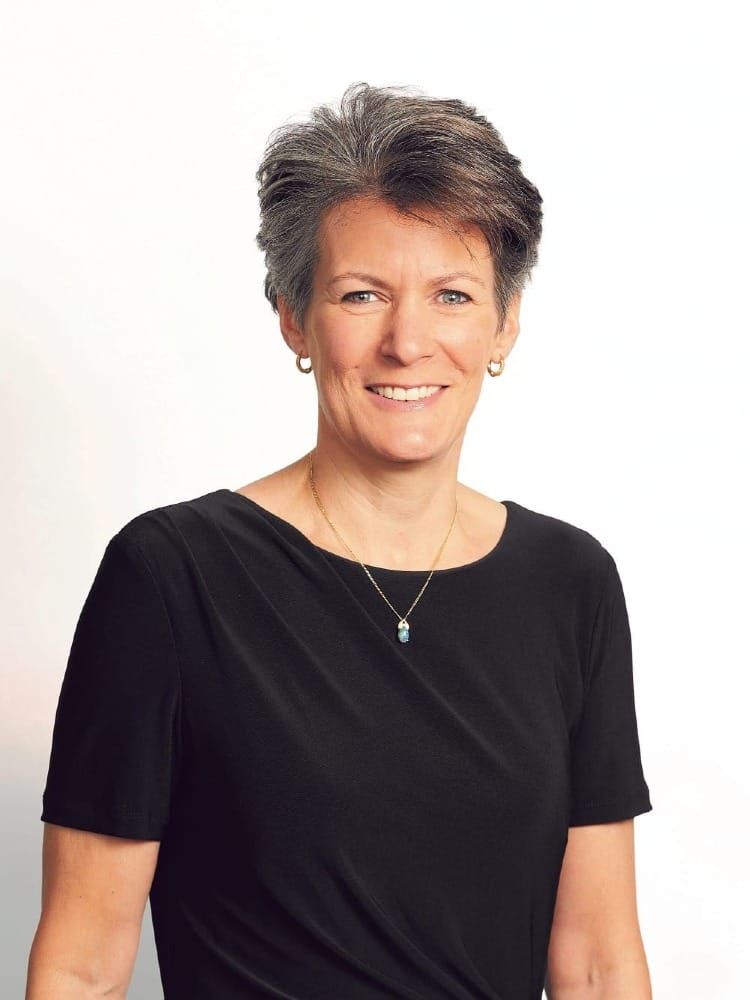
I worked with Hazel Moore in the early 1990s, initially within the Hong Kong equity research department of W.I. Carr, or WICO as it was fondly known around Asia.
W.I.Carr was the first foreign brokerage to set up in Hong Kong and many terrific people passed through its offices around the Asian region in the subsequent decades. We worked very hard and also had a lot of fun. Clients liked us. Hazel was a star analyst, very much the reference analyst for Hong Kong utilities and telecoms, extending her remit through the various telecom and power utility IPOs around the region.
As the interview describes, Hazel returned to the UK in the late 1990s and then founded the corporate advisory boutique FirstCapital in 1999. Her scientific background led to her firm's involvement in UK technology sector fund raising, disposals and mergers. She remains at the helm of FirstCapital, sits on several boards and was awarded an OBE in 2017.
JS: When you look back at your early years, what had the most impact on you when you were young?
HM: My mother died when I was five. That had a pretty profound impact — not only on my childhood, but on how I am as a person. I'm one of three girls; I'm the middle one. My dad brought the three of us up on his own.
Initially we had a stream of au pairs who looked after us, but we were all a bit of a handful and they didn't stay very long. In desperation, my dad packed us all off to boarding school. Around about the same time we moved from Merseyside, where I was born, down to a small rural village in Worcestershire.
Dad's approach to parenting was broadly one of benign neglect. We spent the holidays roaming the fields from dawn till dusk with zero supervision. I suppose these days people would probably have called social services, but back then we just entertained ourselves, we figured things out, and we were pretty self-sufficient.
Dad had raced vintage motor cars when he was younger, and we always had more cars in the drive than people who could actually use them. He had a pretty healthy disregard for convention, but he always encouraged us and always supported us — whether that was with schoolwork or with sports or whatever. Basically I grew up believing that I could do pretty much whatever I wanted, as long as I set my mind to it. That ranged from, when I was ten, passionately wanting to be an archaeologist, through to discovering science and technology and being really interested in that.
JS: At what stage at school did you start thinking about your exam subjects, and how did that narrow down for you?
HM: I did well at school. I was lucky enough to find that I was good at most things. I had a chemistry teacher who looked a bit like Tom Selleck from Magnum P.I. — we were all a little bit in love with him, frankly. But I genuinely loved chemistry, I loved science. I was less interested in things like history. I gave it up at around age thirteen when I chose my O levels, and now as an adult I regret that. I'm interested in history and in what you can learn from the past, but my academic grounding in that area is pretty much zero. It was always going to be science.
There were some points of inspiration in my last year at school. The headmaster had died unexpectedly, and the father of one of the girls stepped in at the last minute — he'd been an academic at UMIST. His name was Dr Ryder, and he was a metallurgist. He was a real pioneer in things like fatigue and fracture in metals, and he'd done work investigating aircraft crashes. He was also involved in investigating Lockerbie, and he'd worked on artificial hip joints, which were becoming a significant field.
I was just fascinated by the application of chemistry and science to real-world problems. We were also, at the time, glued to Wimbledon — it was the Borg and McEnroe era. You were just starting to see new materials coming into tennis rackets: graphite, carbon composites, delivering massive performance advantages. I'm really interested in sport, so that really was the start of a lifelong interest in how science and technology can be applied to real-world problems and deliver solutions.
JS: What do you remember of going up to Cambridge — was there an interview?
HM: There was an interview, and it was very intimidating. We didn't have much of a careers function at school. My French teacher was the one advising me on my scientific endeavours and where to apply.
I said I was interested in Cambridge, and he said I should go to one of the all-girls colleges because they were easier to get into. I'd just been to an all-girls school, so there was absolutely no way I was going to an all-girls college at university. I randomly stuck a pen in the book describing all the colleges and chose Corpus Christi Cambridge because it was in the centre of town and right next to the materials science department.
Corpus had only fairly recently started to admit women — I think we were probably the first full year of having women throughout the college. I went in for an interview with one of the physics professors, and he sort of looked at my application, mused over the name of the school, and said he'd never heard of it. Then he produced a very long piece of wire — probably two metres long and about two or three millimetres wide — and said: "This is the mechanism for controlling temperature in a fridge. How does it work?"
I had literally not the slightest idea. It's actually a hollow tube with gas inside which liquefies at a certain temperature, causing the switch to move due to the change in pressure. My answer on the day was that I had absolutely no idea — but anyway, they offered me a place.
It was a very humbling experience. I went from a school where I was top of the class to an environment where literally everybody was much brighter than I was. The work was really difficult. But you adapt, you settle in, and you get on with it. That environment of being stimulated by lots of really intelligent people, being interested in the work and challenged by it, was really good grounding.
JS: What were the brand-new things in materials science that you became conscious of whilst at Cambridge?
HM: I studied natural sciences at Cambridge, which isn't just materials science. The way the course is structured, you choose modules and then move towards your chosen subject. I didn't actually study materials science until my final year — I did feeder courses before that.
It's a great course because I was able to do things I wouldn't otherwise have done. In my first year I did a geology module. We went to the Isle of Arran and did a field trip, where I was knocking bits of rock out of the hills with my geological hammer all day long. I also did history and philosophy of science. We were studying Aristotle, Descartes, Berkeley — grappling with a whole bunch of questions in philosophy that were totally outside my fairly scientific brain and my A-level background. It was really interesting.
In my final year, my project involved using a scanning electron microscope — which was state-of-the-art, an unbelievably impressive piece of kit. You could look at the structure of materials down to tiny, tiny levels and get incredible imagery of what was happening on the surface of the material. Having the opportunity to work on a piece of kit like that and get that kind of visual image at a microscopic level was fascinating. There were very few of those microscopes in circulation — only at the top universities and research labs. To get access to that as a student was incredible.
JS: Have you been back to your old college at all?
HM: I went back — I think it was last year, or the year before — for the fortieth anniversary of admitting women to the college. We had a day of talks and discussions and meeting lots of other interesting women who had been through Corpus over the years. That was really good.
Then a year or two back, Corpus appeared on the Christmas special of University Challenge, and I was asked to participate on the alumni team. It was a terrifying prospect — the thought of going on national television with Jeremy Paxman and making a fool of myself. But I thought, why not, and said yes. That recording is on YouTube. I did get a few points, which I was quite pleased with. I missed a Blackadder question that I should have got — I wasn't quick enough. We lost to one of the Oxford colleges by five points. I was absolutely gutted.

Corpus Christi, Cambridge: Hazel Moore, Helen Oyeyemi, Robert McCrum (Captain), and Philippe Sands.
St Anne's, Oxford: Sarah Gristwood, Roma Agrawal, John Robbins (Captain), and Adam Parsons.
JS: Was it the milk round that brought you to GEC-Marconi?
HM: No. I'd actually been a sponsored student with GEC-Marconi. I'd worked for them for a year before university and during my holidays throughout my time at Cambridge. They did offer me a job at the end, but I didn't take it. Most of the other students they had were electrical and electronic engineers, and it was mostly defence-type work. I was the only materials scientist and they didn't really know what to do with me. By the time they offered me a job, I'd made other plans.
JS: When you were doing placements with them, what sort of facilities were you going into, and where was that?
HM: I worked at their research centre in Great Baddow, which is in Chelmsford. They were doing a lot of defence-related research, but I was working on some really interesting things. I was working quite a lot with lasers — high-powered lasers — creating holograms in new materials and exploring the applications for holography, which subsequently fed into things like lithography for creating computer chips and TV screens. I was also doing work on smart cards and smart card materials, which was quite a big commercial programme at the time.
It was super interesting. There were probably a thousand people on site, a very high proportion of whom were fresh graduates — either straight out of university or up to five years out. It was full of young people. There weren't very many women on site, but we did lots of activities: weekends away and all sorts of things. It was interesting from a work perspective, but also my first experience away from home, and a good social and learning experience.
JS: Can you say anything about what happened to GEC-Marconi and whether any of its activities mapped into what's going on today?
HM: GEC-Marconi massively overextended itself in a bet on telecoms equipment in the late 90s and got into trouble when the dot-com bubble burst. The bits of the company that were left, or hadn’t already been sold, were disposed of and the company no longer exists. The site I worked on still exists — it was sold to British Aerospace and is still in use by them as a technical site. But one of the issues of British industry and the British tech sector is that a lot of the big industrial and technical companies that did have big research labs, such as AstraZeneca, Shell, Pilkington, ICI, BT etc, deemed them to be cost centres and either massively reduced them or sold them off. That's a real loss from the perspective of our industrial heritage.
The whole UK economy became very financialised at a cost to other activities. There are attempts now to reintroduce specialist manufacturing and high-skilled jobs, but unfortunately a lot of that competitive activity has moved elsewhere completely, and it's difficult to rebuild.
JS: And so the alternative plans for you were Asia-related?
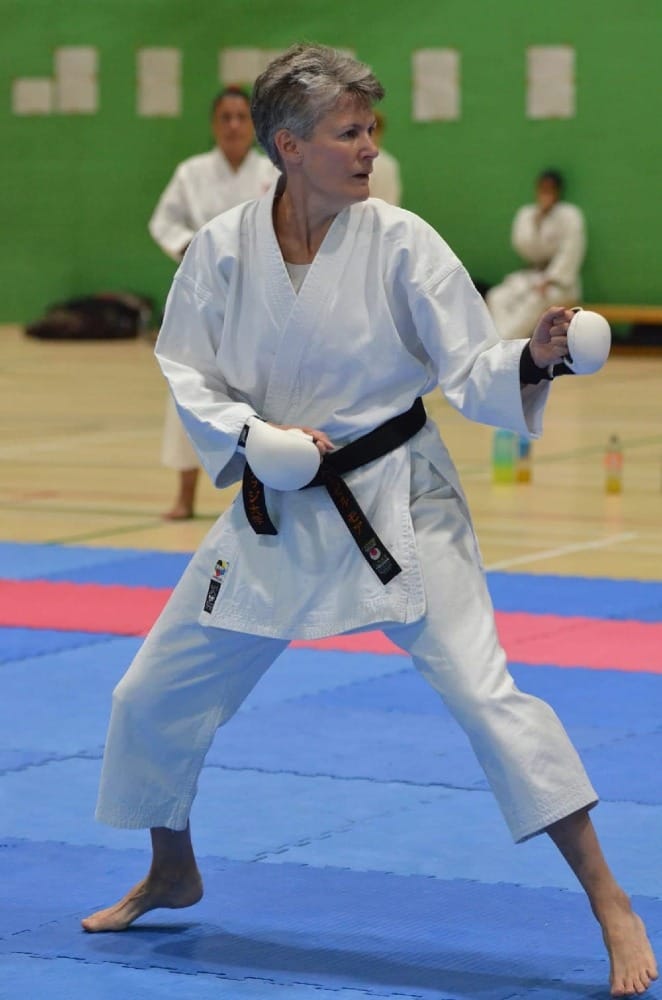
HM: I had taken up karate at university, and was part of the university team, competing regularly. Cambridge University had an exchange programme with a university in Tokyo called Keio, and we made plans to go and train in Japan with Keio post-university. A group of us raised some money and went over. I had planned to do a little travelling in Asia and then come back to the UK.
We went to Japan and had an amazing time. I then travelled through China and ended up in Hong Kong. Within two or three days of arriving, all our money was stolen. I had no means of getting back to the UK even if I'd wanted to. So it became a rather urgent task to get a job and earn some money — and I ended up staying in Hong Kong.
Life throws these things at you and they can change your trajectory in quite unexpected ways. I went to Japan because of karate and stayed in Hong Kong because I didn't have any money. That's also how I ended up in finance.
At university I'd had these ideas that I was going to be a captain of industry — some sort of female CEO of a big company, breaking glass ceilings.The country was saying it needed materials scientists. There was a huge shortage. But the reality was quite different. I remember going to see British Steel in Sheffield and being taken round the factory — this huge place, pitch black, red-hot molten steel shooting around, how I would imagine Dante's Inferno to look. We were walking on walkways above the shop floor, with blokes trying to look up my skirt and I just thought: this is not me.
So I'd had it in mind that I'd go into tech, but then we ended up in Hong Kong. Once there I thought, what does one do in Hong Kong? It's a financial centre — let's get a job in finance. I wrote lots of letters to lots of people and said: here I am, I don't actually know anything about what you do, but I'll learn very quickly and you don't have to pay me very much. I met Nick Harbinson at W.I. Carr and he said he'd give me a go. That's how I got into finance.
JS: You started with little knowledge of finance. Was the environment unusually meritocratic?
HM: Absolutely. When I worked in the City for a few years after I got back from Hong Kong, it was much more hierarchical and structured. You were expected to follow a certain path, be a certain age, tick certain boxes before you could move on. In Hong Kong it was very meritocratic. There was an opportunity and you could grow into it by demonstrating that you could do the job well. Then it was: if you can do that, you can do this. You were given responsibility and opportunity to grow in a way that would have been very difficult in the UK.
Nick Harbinson [Managing Director of WI Carr (Overseas)] insist that I did my CFA. He made me take that qualification, which I resisted at the time because doing it on top of a full-time job was quite demanding. But in hindsight I'm very grateful for it.
JS: At what stage did you become the Hong Kong utilities analyst?
HM: When I first went to Hong Kong, Shenzhen was just a fishing village and there were no stock markets in China. But there was incredible growth and activity in southern China being fuelled by investment from the Hong Kong Chinese. Then Deng Xiaoping did his tour of southern China and signalled that he was all for capitalism with Chinese characteristics — and that just opened the floodgates.
There was enormous investment going in, huge demand for power, huge demand for telecommunications. The utility companies in Hong Kong were able to negotiate commercial arrangements to help meet that demand. They were also among the largest and most liquid stocks in Hong Kong, and their exposure to southern China's growth was very appealing to international investors.
From the telecoms perspective, you were also seeing the breakup of state-owned monopolies, the introduction of privately owned second networks, and mobile networks starting to come to market. There was lots of really interesting activity amongst big, liquid sectors that institutional investors could get behind — and that was something I was able to benefit from.
JS: There was one landmark research report you wrote on China Light & Power.
HM: That report really put me on the map. W.I. Carr, over a number of months, pretty much dominated the entire trading in that stock, which was one of the biggest in the whole market.
What I'd discovered was that China Light & Power had done a deal with the Chinese authorities, and that they were able to start reporting revenue and profit from selling electricity into China — something that wasn't known in the market at the time. I remember the meeting very distinctly. I'd taken along an Italian fund manager and asked him beforehand if there was anything in particular he wanted to focus on. He said: just run the meeting as you'd like to run it. Through the conversations in that meeting, this deal came up and I pursued it. The poor Italian fund manager looked completely bemused because he had no idea what was being discussed.
I came back to the office and wrote it all up. Before we published, Frank O'Reilly — who was the COO — checked it with his contacts at the company and confirmed it was right. There was certainly a discussion afterwards about how the information had been released to the market, and I was called into a meeting about exactly how I knew what I knew. It was all completely legitimate and above board, but I think some of the bigger names in the market were put out that they hadn't jumped on it first.
Writing research reports really was about doing a jigsaw puzzle. In this day and age, when information is instantly available to everybody, it's hard to remember that back then you had to ferret out different pieces of information and try and relate what was happening over here to what was happening over there, and put it all together to create a coherent whole. Access to information was very asymmetric — this was all pre-internet, pre-Bloomberg terminals.
JS: And then the telcos followed?
HM: Yes. I covered all of the telcos across Asia. I remember working on the IPO for Indosat when we were in Indonesia. There were mobile networks being set up in Vietnam, Hutchison was launching Orange in the UK — it was a very interesting time. Before there was TMT, there was just "T" — Telecoms.
JS: Talk us through your departure from W.I. Carr and the immediate next move.
HM: I left Hong Kong in 1995. My then-boyfriend, now husband, had been working for Merrill Lynch and was offered a new job at UBS. It was something of a decision point — do we commit to several more years in Hong Kong, or do something different? We'd been away quite a long time. He told UBS he'd like to work for them but would like to do so in London, and they agreed to bring us back.
We worked in the City for a couple of years. Still specialising in Asian markets, but of course the Asian markets weren't live for most of the day, and the City environment was very different — much more hierarchical compared to the growth, activity, and entrepreneurial energy of Asia. So I did that for a couple of years and then decided to quit.
Everybody said: why are you quitting? You've got a good job. The National Lottery had just been introduced relatively recently, and somebody started a rumour that I'd won it, because they couldn't figure out why I would walk away otherwise. I thought it was funny and never denied it. We went travelling for two years and spent a lot of time in South America. By the time I checked back in with people, the story had grown more and more specific: apparently I'd won £2.3 million! I think some people still believe that.
JS: And then you came back and found yourself in an internet boom?
HM: I came back in late 1999 and the first internet boom was really getting going. I'd seen this incredible boom in Asia and hadn't expected to see another one so soon, but this was something I was really interested in. It was entrepreneurial-led, it was growth, it was tech.
I started working with friends and contacts who had tech ideas and wanted to start companies but had no idea how to create an investment opportunity and pitch it to investors. I knew how to take a tech proposition, make it into an investment opportunity, and get investors interested. Nobody else was doing that for tech start-ups at the time. That was the genesis of FirstCapital.
Of course, the internet bubble then burst, so our first few years after getting FCA authorisation were in a rather different environment to the one we'd anticipated. But there are booms and busts — you roll with the punches.
JS: When you set it up, was it essentially a corporate finance advisory boutique?
HM: Yes — it's all corporate finance advisory work. In hindsight, you don't know what you don't know, and I'm sure we made pretty much all of the mistakes in the book. But the objective was to do something I enjoyed and knew how to do, in a sector where I thought there was a lot of growth and opportunity.
JS: Can you give an example of a transaction — soup to nuts — that worked very well?
HM: We've done some really interesting transactions. One landmark early deal was selling MultiMap to Microsoft. MultiMap was one of the original online consumer mapping applications in Europe. This was around the time Google Maps was just starting, and Microsoft wanted a competitor. MultiMap became Bing Maps and was rolled out globally — so that is an example of a company we sold to Microsoft that became globally significant.
We also sold a company called Bloomsbury AI to Meta — Facebook at the time. It was one of the very first AI transactions. Meta was under enormous pressure over inappropriate content and fake news, with thousands of people physically looking at posts and taking them down, bu they were completely overwhelmed by the volume of material. They needed an AI solution to address that automatically. We sold them Bloomsbury, which was a natural language processing AI business out of UCL, and that became the core of their AI labs in the early days.
JS: And can you think of an example where everything was lined up and then something completely different happened?
HM: There are always the deals that don't complete, and they are incredibly painful. We had a company we were selling — an authority on hedge fund data with a really interesting proprietary data set —to one of the big financial data providers. The transaction was done, it was negotiated, all the documents were ready, we were two days from signature. It would have been a great deal. And then Lehmans happened. The markets collapsed and the buyer said: I don't know how to price this deal anymore — we're pulling out. That was incredibly painful.
JS: As the steward of this business, have you enjoyed developing close personal relationships with the principals of companies and other professionals you sit around a table with?
HM: The people I work with — our clients — are really, really interesting individuals. They are visionary, entrepreneurial; they have an idea and they're trying to develop something that is new, innovative, disruptive, creative, of value. As individuals they are all interesting, sometimes challenging, and always different.
I really enjoy working with entrepreneurs and CEOs. We work pretty intensively and closely over the period of a transaction, and I get a lot of job satisfaction from helping them achieve something that is transformational — whether that's transformational for them personally in terms of wealth generation, or for the business in terms of access to resources, or moving them into a new home where they can go global. It's all about how we help a company become more successful, help them drive growth, drive value, help that individual achieve their objectives.
You get these very intense relationships with super-interesting people, some of whom go on to their next venture and come back to ask for our help again some years later.
JS: What about the people you've taken into your business and how you've built them up?
HM: We've built an organisation that is quite different from most investment banks, and very deliberately so. Most investment banks have a pretty poor reputation, and the culture within them can be pretty challenging. We are not like that.
We don't believe in presenteeism — people being there until all hours because they think they should be, looking busy because somebody's watching. People like working at FirstCapital. We've invested a lot of time and effort in making it a very collaborative, team-oriented environment where everybody shares knowledge and best practice. It's not a "me, me, me" organisation the way a lot of banks are. It's more: if all of our people are successful, we are successful as a business, and then everybody benefits.
We've invested a lot in people management and career development — how to support and motivate people. And if people have family commitments and want to go and see their children in a school play, fantastic — go and do it. Don't miss out on the important personal things. A lot of people in jobs like ours feel that their family suffers, and that's not the kind of environment we want people to be in.
JS: Looking at the tech scene — UK, Europe, and global — which specific sub-sectors do you think are very compelling right now and in the next few years?
HM: AI, obviously. Some of the things happening in the AI space right now are unbelievable, and the opportunity it is engendering is extraordinary. AI is at a genuine inflection point in terms of impact — it's moving from being a novelty to being embedded in the infrastructure. It's fundamentally rewriting the playbook for scaling a business, because of the ability of small teams to achieve more, faster, with less friction and less capital, and to create new categories of business and opportunity.
In the UK we are in a really, really good position. We have three or four of the top universities in AI in the world — Oxford, Cambridge, UCL, Imperial, and others coming along behind like Edinburgh. We have Google DeepMind, probably the best AI research lab in the world, headquartered here. London is one of the biggest financial centres, with access to capital and markets, particularly in FinTech. You look at Revolut, which was only founded ten years ago and is worth US$78 billion now. That wealth creation over that time period is phenomenal.
JS: If you were feeding bullet points to non-technically briefed government ministers on what they could do to improve the UK's footprint in these technologies, what would you lead with?
HM: A lot of what needs to be done isn't necessarily about access to capital, important as that is. It's about skills. One of the biggest determinants of whether a start-up succeeds is not so much the quality of the idea or the capital — it's the people and their ability to execute.
The skills the workforce of the future needs are different from the skills of the past. It's about problem-solving, creativity, adaptability, and collaboration — rather than retention of facts. Nobody needs to retain facts any more; those facts are available at the click of a few buttons. What matters is what you do with those facts and how you apply them. So there's an education and skills piece that is really important.
Then there's research funding. I don't know enough about this to talk about it with great authority, but from various people I've spoken to, there's a sense that a lot of really important research funding projects are stuck because of political imperatives. Government getting out of the way and allowing researchers and academics to get on with the job they do best will help generate more research, more ideas, and more value-creation opportunity. A lot of this is still tied up in post-Brexit discussions about access to European research frameworks, and progress is particularly slow.
JS: In your advisory and non-executive positions outside your business, what have you chosen to do?
HM: Everything I do is aligned with my core interest: how do you take interesting science, technology, and innovation, and make it commercial — grow value and drive growth? That's the central philosophy behind more or less everything I've done.
I spent six years on the board of Innovate UK, which is the innovation agency in the UK — the main grant-giving body to academics and businesses to take academic research and turn it into commercial ideas. I chaired a committee called Emerging Industries and Technologies, which was about identifying areas of academic strength in the UK where we had a real competitive advantage internationally and driving that into commercialisation to deliver the next $10bn+ industries. One of the successes that came out of that programme was everything that's going on in quantum computing — the UK is really, really strong in that area. We seeded it, George Osborne as Chancellor put a lot of money behind it, and now, a decade later, you're seeing some incredibly important companies coming out of the quantum space in the UK, and we are leading the world in this sector.
When I stepped down from Innovate UK, I joined the board of British Patient Capital, which is at the other end — about getting money to the start-ups and scale-ups to help them grow and commercialise. British Patient Capital is a subsidiary of British Business Bank, the National Development Bank. It was set up in response to the Patient Capital Review, which was about addressing the gap in scale-up capital between the UK and the US. In the US, companies can raise more money at a later stage, stay private longer, and grow bigger. Over a six-year period, we became the largest single investor in venture capital and growth funds in the UK. We created more capital in the system, more diversity of managers, and launched a direct investing programme where we co-invested in some of the fastest-growing companies. We've invested in 64% of all the unicorns created in the UK — companies worth over a billion dollars. We also created a programme investing in deep tech and life sciences, which are sectors where the UK is strong but where it has historically been difficult to attract funding.
The long-term objective was always to get private capital into the sector — to get pension money, trillions of pounds, allocated into the venture capital industry to create a self-sustaining ecosystem supported by the private sector. Last year I transitioned my British Patient Capital role into a role with a new entity. We've just announced the first close of our first fund, the British Growth Partnership, with three pension funds directly investing in British scale-ups for the first time. The hope and objective is that that will be the first of a much larger pool of capital from the pension industry, that more pension funds will follow, and that we will be a conduit for private capital to come into the market.
Going back to the Revolut example: Revolut raised US$3 billion last year. It's a phenomenal British success story, yet almost none of that money has come from the UK. That investment opportunity for British pensioners has almost completely passed the UK by. That's what we're trying to address — to retain some of that value in the UK for the benefit of the economy and of British people.
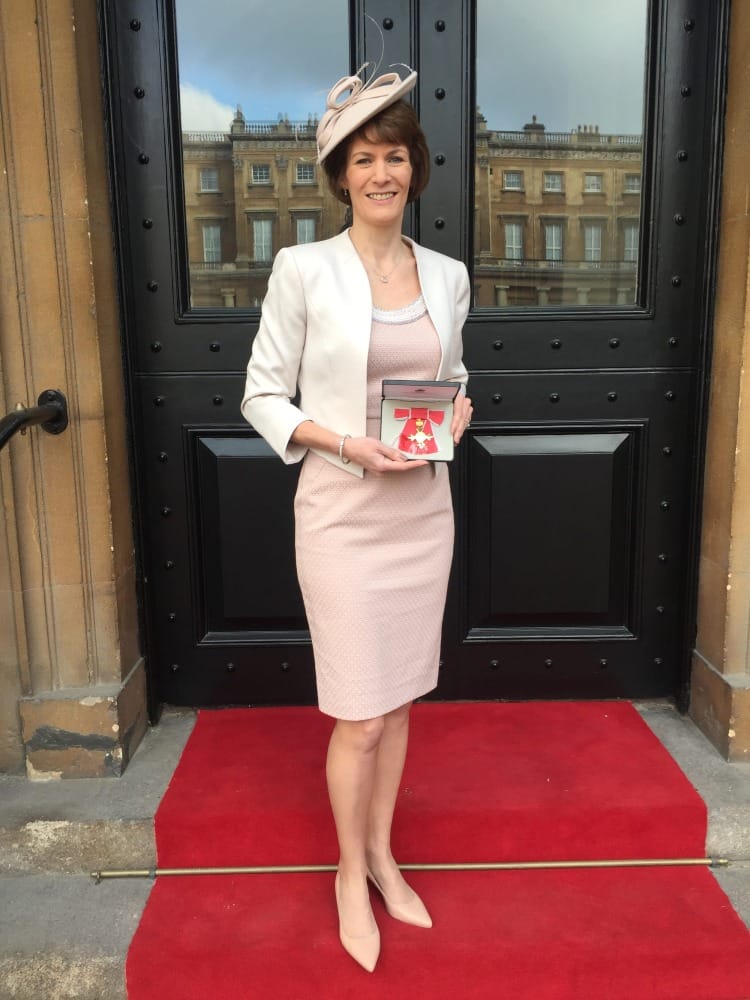
JS: You were awarded an OBE, please relate what you were cited for.
HM: For services to entrepreneurship and innovation. As I said, the thread that runs through all my work, not just with FirstCapital but my NED and pro-bono work, is about supporting the most promising tech companies in the UK to grow and be more successful.
I’ve been involved all the way from the earliest stages of ideation. I mentioned the work at Innovate UK, but as another example I helped set up a venture prize for the commercialisation of promising academic research in materials science with the Armourers and Brasiers, one of the City Livery companies.
More latterly I’ve focused on getting more money into the ecosystem to enable scale-up companies to raise more capital and grow faster. The idea is to create more companies like Revolut and fund them in the UK, so they grow and create value here. .
JS: And finally, what do you do when you're not working?
HM: Two things, really. One is my garden. I always considered myself a country girl, having grown up in a village, and I always intended to move back to that kind of environment — but life got in the way and I lived in London for twenty-five years. Four and a half years ago we made the move to a village in Essex. I absolutely love it. We're on the top of a hill with far-reaching views to the south, surrounded by National Trust land and country park. I have a garden that I spend most of my free time in — I grow my own food, I make my own jams. For me it's really good for my mental health. It's my happy place. I go there to enjoy the physical labour, the satisfaction of growing things, and then sitting on the deck in the evening with a glass of wine looking at it all.
The other thing is karate. I’m a black belt. I still train three times a week and went back to competing recently. We've turned the garage into a bit of a dojo, so I can train at home, but I also train at a dojo nearby. Karate is fantastic physically — for strength, fitness, and flexibility — and mentally for focus, concentration, attention to detail, and constant learning. And it's a fantastic stress reliever at the end of a difficult week to go and kick and punch somebody, with control, obviously!
JS: Thank you, Hazel.