The World's Smallest Festival - 3rd and final part
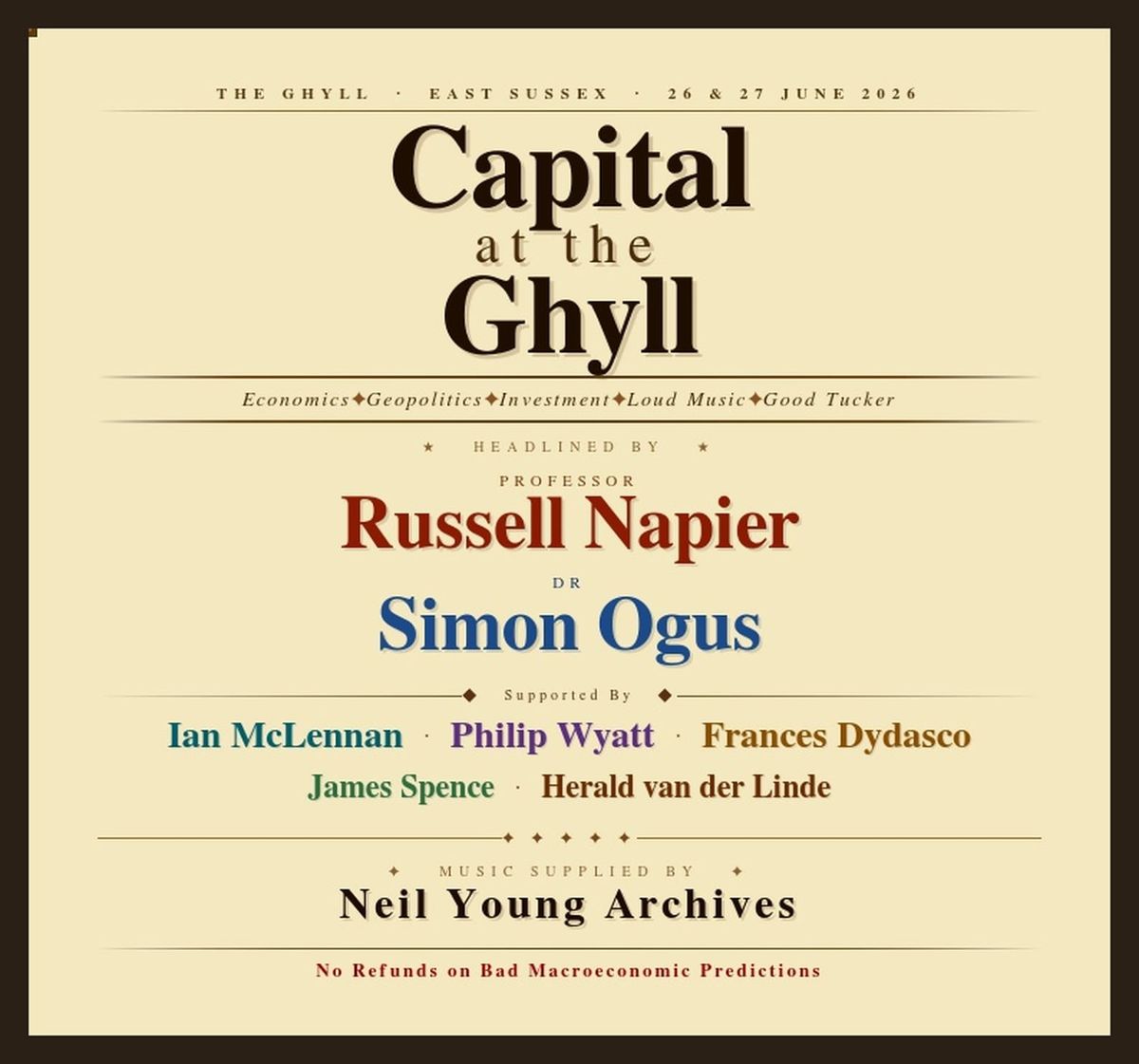
Russell Napier joined for the second day of the Sussex based investment 'festival'. He had just returned from the US where he had attended all three of Scotland's 'qualifying' games. Russell's pain was mitigated by the facts that he is an adopoted Scot - being orginally from Nothern Ireland - and also an historian, well enough versed in the vagaries of Scottish football on the world's larger stages. The scars for his accompanying son, though, were newly formed in Boston and Miami.
Interestingly, Russell suggested Scotland would have had a much better chance had they played their games in a different order. We then went onto to discuss why Glasgow could not be more like Boston before delving back into the main point of the two-day colloquium which was global asset markets, current set-up and outlook. Attendees on day two were Russell, myself, Frances Dydasco, Ian Mclennan and Simon Ogus. The logistics, tech and back-room side of things (me) were somewhat harried by this stage. As a consequence, Phil Wyatt was left adrift in a hotel room somewhere in Asia waiting for a connection that never came.
The references to Neil Young were prompted by the fact that Ian, Simon and myself were wearing Neil Young tee-shirts. No festival is complete without music and Neil had responded positively to a letter asking if we could feature him and his music on the basis we "were looking to discuss and solve some problems".
RN: I'm looking at Neil Young T shirts, do we know if he's all right, have you heard anything about him?
SO: He sent us a message last month.
JS: He did, I wrote to him and he said, "Peace and love, best of luck with it all." He notified fans that he is "listening to his body" when the most recent tour dates were cancelled.

RN: Well, at this age we always mention Keith Richards, who said anything's possible.
JS: Keith Richards featured in an an interview I did with the sports and entertainment barrister, Ian Mill. We talked about shepherd's pies, Keith has one in his dressing room before every performance.
Russell is probably thinking about the different types of American beer he's had to consume over the past two weeks.
IM: He's apparently drunk Boston dry.
RN: I like the quote from the Tartan Army, they were accused of drinking Boston dry, to which the guy replied, "Yes, there was no beer left in the pub, all they had was Bud Light."
JS: Share your thoughts on the whole ambience and your observations.
RN: It's an interesting commentary on a civilisation, James. I speak as a non-Scot, and I realise there are Scots on this call, but the idea of the dour Calvinist is hard to reconcile with the Tartan Army, they're pretty cheerful even before the first pint. This is my third trip with them, and they get more exuberant every year, to some extent I suspect it's relief from not being in Scotland, and I don't just mean economically, but politically. When they get away they really want to get away, and they don't need alcohol to do it, but it helps. There was a bar owner in Boston who told someone that three Scottish gentlemen came in at 11am, left at 11pm, and consumed twenty five pints each between them.
On the football, I think it might have a bearing on investment, if they'd played the games the other way round it might have been quite different, because Scotland's only hope was to score lots of goals against Haiti, but once they went one nil up they reverted to conservatism, which is inherent in management, to shore up what you've got. Had they played Haiti in the last game, knowing they needed three goals to have any chance of progressing, I suspect it would have been a quite different game, though it doesn't mean Scotland would have got the goals. It's a slight reflection on the psychology of life, and of football.

My only other observation is on Boston itself. I first went there in 1992, the place was on its knees after the big bust, Bank of New England went under that year, the biggest bank in those days, thirty billion dollars, it was suffering from a collapsing mainframe business, and residential and commercial real estate collapse, there was a huge motorway running through the middle of it, the docks were empty. It's a long time since 1992, but what a transformation. Some of that is the private sector and growth in America, but quite a bit is public sector investment too, the transport system is now excellent.
JS: I'm thinking of Glasgow again, Russell. It needs to do a Boston. I met the head of the state legislature when she was US ambassador to the Republic of Ireland, she really impressed me.
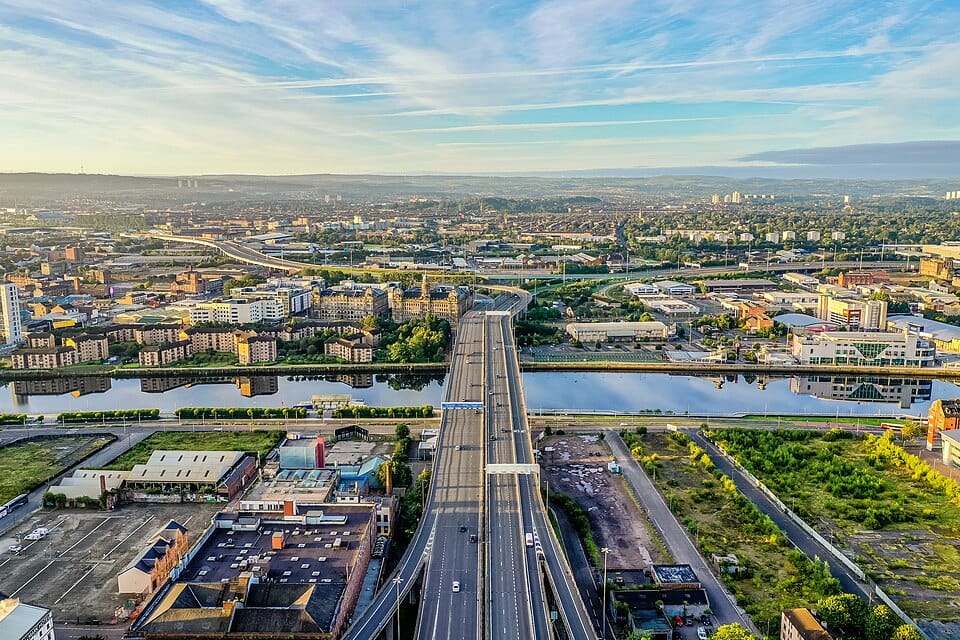
SO: Russell, what changed though? I remember going to Boston in those days, and the Big Dig went on for twenty years, what suddenly flipped the switch and got their act together?
RN: It has to be said the sample period matters, but I think the Big Dig made a huge difference, everything around it, restaurants in the North End, the new development, is now incredibly prosperous. I don't know to what extent that's psychological, Simon, where reconnecting a divided city suddenly draws private sector capital into the bit that was isolated. A lot of it is psychological, because it was just a flyover, once again we're back to Glasgow, but that flyover made a profound difference.
Of course, growth in the economy fundamentally matters too, and Boston became a huge convention city, so it can swallow the Tartan Army easily. I'm not sure how much of a destination it was for Americans thirty or twenty years ago, but it's absolutely a huge destination now, if you live in the Midwest and want to do something over a long weekend, Boston's pretty high up the list.
SO: I haven't been to Glasgow in probably fifteen years, but what comparison are you drawing here, it's a little sad, isn't it, Glasgow these days?
RN: There's potential, it's perhaps where Glasgow is today, it could become something much bigger and better, if Boston can do it, why not Glasgow? But it needs a certain kind of endorsement of investment and wealth creation.
There was a very distinctive moment in the recent Scottish political campaign, where Malcolm Offord, a businessman from Glasgow and former Tory who moved to the Reform Party, turned to the head of the Green Party in a debate and said, "Do you want more people like me in Scotland, or less?" And the Green Party representative said, "Less." I think that's a debate that's going to be publicly had now, and if the answer is less, the chances of Glasgow doing a Boston are close to zero. But if at some stage the answer is that we want more people like Malcolm Offord, why not?
SO: One final Scottish political question, how come [former First Minister] Nicola Sturgeon hasn't been charged and convicted as her husband was?
RN: There isn't going to be a private sector prosecution, that won't work, there's the civil case brought against Nicola Sturgeon, and there may be a judicial review of the prosecution service as well. My surprise is as great as yours, but we haven't heard the end of this yet. It is shocking that it's being pursued this way, we've never even got to court, there haven't been private individuals involved. So you get to something really profound, has the long run of a single party in power corrupted the legal system, the prosecution service, even the police?
I think most people in Scotland now have serious questions about whether it has. I don't know enough about Boston to know whether the reduction in corruption there, which was rife thirty years ago, has come down at all with the regeneration. But there are serious questions to ask now about the independence of the whole legal system, and we have a unique situation where the head of the legal system is technically appointed by the party, a quirk of the constitution that needs fixing quickly.
SO: It was interesting that as soon as Nicola's name was mentioned, Scotty the dog here started rolling over and growling.

JS: Ian's dog has been trained very well. Just before you joined, Russell, Ian shared some metrics comparing the AI boom with the TMT boom, they're remarkably similar except for the US fiscal position.
IM: Although the balance of that is, the summary on valuations and the size of the boom is remarkably similar, what's different is that some balance sheets in the private sector are in very good shape, which they weren't necessarily back then, while the public sector balance sheet and cash flow is very negative, whereas the fiscal position was actually in balance back in 2000.
RN: My recollection of the dot com bubble - and just because you lived through something doesn't mean your recollection is correct - is that one of the great things that happened is that the bust didn't have much negative impact on the banking system or the credit system, despite some high profile bankruptcies like Tyco. There's a lot more debt being used this time, admittedly it can be issued because there are existing supportive cash flows from other businesses for some of these big companies, but there's a lot more debt involved this time.
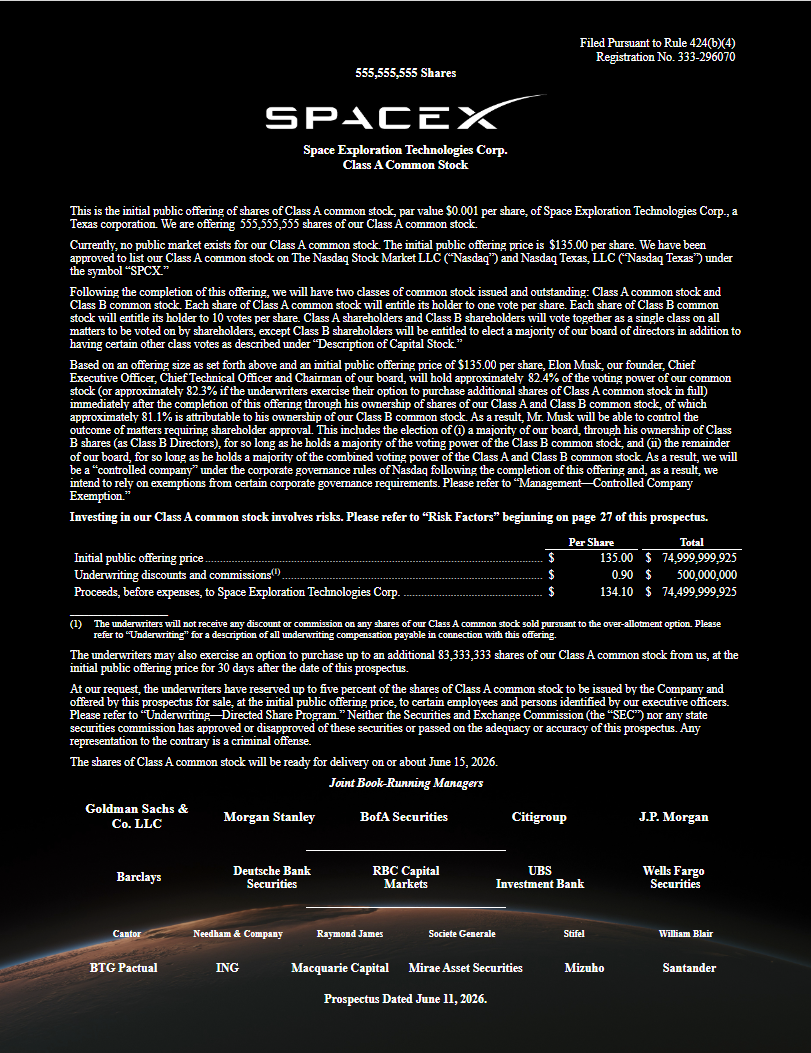
IM: I'm not sure that's quite right, Russell. Frances does have some numbers on debt, and it's starting to get worrying. I think in '99, 2000, the dot coms were funded by venture capital and IPOs, but the telecoms, the WorldComs, the Global Crossings, some of the more famous frauds and busts, were debt funded, by bonds, so there wasn't really a banking issue there either. This time it was initially funded by capex, then by cash flow, but the combined quantum of funding from IPO and VC, IPOs have been quite small so far until SpaceX, but combined IPO and VC equity is about double relative to GDP compared with '99, 2000. Frances, I think you have some debt numbers?
FD: Just remember that so much of this debt is private, so whatever number you're given, it's probably bigger. And remember how private equity works, often what's counted as equity is actually debt, especially given they have these interlocking structures where they'll raise a debt fund that basically recapitalises their equity fund. So you have to be careful with those numbers, I don't think anyone knows what the ultimate exposure will be, given the multiple layered structures within this private system.
SO: Frances, I've got a question on that, on the private credit story. The Johnny come lately trade was all the private credit people suddenly saying, "We want to share the benefits of this with retail." Did that ever gain any major traction, or is it still mostly with wealthier individuals? Because if you wipe out a poor person, that tends to have a much bigger impact on the broader economy.
FD: I think it's been approved, right, Russell?
SO: Yes, but how much was actually issued, how much actually went through? On private debt in general, you have Blackstone, KKR and so on, still doing it, but the SpaceX IPO was interesting because retail was a massive part of it. And a lot of the platforms that let retail investors subscribe also gated them, saying if you try to flip the position within, I think it's around six months, we'll ban you from the platform. It's effectively a gate. If you think about it, usually after an IPO there's a thirty day stabilisation process the underwriters commit to, then you add the gates, and on top of that the insiders have a staggered exit strategy, you can't just exit when you want, there's a schedule. So they're managing the giveback on stakes carefully, remember they only have a four percent float.
RN: The reason I raise the debt issue is that, in terms of the statistics, I think it's true the banks aren't heavily exposed this time, that's the lesson learned from the dot com bust, so I'm a bit more confident that if it falls apart it doesn't create a credit crisis that stops the growth of the banking system. The American banking system is doing really well, and it's clear that Bessent, and I think Walsh, are really focused on getting expansion in commercial bank credit, because that's what's going to fund the reindustrialisation. So I'm more confident than many that that will continue. But the non-bank credit, I'm looking to Ian here, the thing that's potentially different is that the dot com companies, when they went down ninety percent or more, at least didn't have debt, it was whatever you'd conjured the asset to be, "eyeballs," but there wasn't debt behind it. Now we've got a lot of debt, so couldn't the impact on equity prices be even bigger this time, because there's a claim on the other side of the balance sheet for the assets, whatever they are?
IM: I don't remember debt being much part of it in 2000, though it was part of the fibre rollout specifically. This time, with AI, the debt has to be serviced, and cash flows can be there, but it's difficult to see profitability from those cash flows given the cost of provision, I think it's around thirty percent of the debt, and whether that might become a bigger issue. Definitely some of the hyperscalers, the Mag 7, have started issuing debt, but relative to the strength of their core oligopolies and monopolies, as long as those remain intact, I'd imagine it's manageable. However, a lot of the data centre debt is now going off balance sheet, Meta has famously done a massive off balance sheet data deal, Anthropic is doing similar deals with Broadcom guaranteeing part of the debt strip because it's selling chips into it. The ultimate owners of that debt are more private credit funds, sometimes bespoke deals between a couple of banks to buy the data centre debt and subordinate it out. So I'm not sure it's that much in the listed corporate sector, there are some in the data centre world, like CoreWeave, that are more highly leveraged, but they're not trillion dollar companies. The question on the debt side is how the private credit funds manage it.
SO: Let me ask my question a different way then. When AI started to gain prominence, suddenly you had a big markdown on software companies, and Blue Owl, for example, had to gate because 30% of their book was software related loans. My sense is that fortunately that happened early enough that retail didn't really get the opportunity to get in. But if you've got this dispersion between the profitability of fifteen or twenty companies and the rest of the economy, and a lot of the private credit is in the rest of the economy, even though the new stuff is going to the winners, that's where the feedback loop comes in. But if the owners of the private credit are family offices, sovereign wealth funds...
IM: I think they still mostly are.
SO: Then it doesn't have the same broader credit intermediation issue. Russell, one follow up, you said the US banks are in good shape, which I'd tend to agree with, is it the same for the European banks?
RN: I think the global banking system, it's a long time since 2008, and one thing you can say about a banker, if they're not making many loans, they're likely to make better loans. We learned this in the Asian financial crisis, there was a quote from a Midwestern banker I met years ago, "If it grows like a weed, it is a weed." It would be very difficult for European bankers to make bad credit decisions over the last fifteen years, given how few credit decisions they've made.
SO: But you still have the linkage with the fiscal side in Europe, don't you?
RN: That's the thing, and it's been the real problem, the absolute core problem for the whole of Europe and the UK, is we have no more micro funding. I'm not saying it's a good thing that they've done that, but once you have, and the UK is a particularly extreme example, we've now got a quasi-geared private sector to an unbelievable extent, at an unbelievable pace. It's worth saying we've fixed the private sector balance sheet even faster than Japan did, and that's one of the reasons growth is so bad. So yes, I do think European recovery has to be a good position, but in terms of private sector gearing, not every economy in Europe, but many of them, have massively reduced it. What we need now is the trigger to get it going, and I think it has to start with bank credit growth, and get credit flowing to small and medium enterprises for investment, which is what the Labour Party was elected to do, in November.
IM: Can we pause there? It'd be good to talk about Europe a bit, since we've talked a lot about AI. But just on private credit before winding up, there have been some frauds in private credit, not in AI, in the UK and the US, and there was a surprise when HSBC announced a large hit because of exposure to private credit funds that were in turn exposed to the frauds, they weren't managing their loans, they'd just given cash out to private credit funds. By HSBC's standards it's very small, I think it was half a billion or so, but it's still a big number. So some of these banks will have exposure to private credit funds, and you might guess some of the Europeans have more exposure than you'd think.
SO: The wealth management arms would certainly have exposure.
RN: It's a couple of months since I looked at the data, but what you see from the European banks is their cross border exposure is to non-bank financial institutions, that would be cleared up by the credit fund. If you look at the bit that's really grown over the last fifteen years, while their overall dollar balances weren't growing much, the share going to non-bank financial institutions has roughly doubled. I think that's primarily hedge funds. We can have a big debate on the solvency of hedge funds, but the insolvency of hedge funds hasn't really been a big issue, losses have been, we can all think of examples, LTCM springs to mind, but the exposure seems to be that if something went really badly wrong at the world's five biggest hedge funds, then you'd have something for the banking system to worry about, but not private credit, which I think is tiny compared to loans.
IM: So we're told, we're told it's two trillion dollars or whatever, but it does seem to be growing like a weed.
SO: Even if it's five trillion, it's not going to matter as much. One final question on European banks then, back in 2007, 2008, you had Italian banks with forty percent of their book in Italian bonds, and the fiscal side hasn't got better in Europe since. Is there still that potential doom loop in some banking systems, France, I'm thinking of maybe?
RN: I couldn't be more negative about France. With the benefit of hindsight we all said, "That was obvious," and if you took an anonymised set of country statistics today and looked at France's, you'd say, "Wow, which emerging market is that?" The numbers for France are so appalling, we've been here many times before, something cannot go on forever, it will stop, and France will stop, but as long as we don't know when, we tend to ignore it.
After the GFC, most European banks, HSBC being the exception, exited international finance, whether it was Barclays, RBS, the Germans, even the Swiss to some extent got out, or reduced it. The French just kept going. Of the fifteen most systemic banks in the world, three are French, so if France has a problem in its credit, it's a global problem. It's also the world's fourth biggest bond market, and fifty four percent of all its government debt is owned by foreigners. So if France has a problem, we've all got a problem, and it's actually bigger than the US residential real estate problem was.
SO: As a follow up, back in the GFC, Target 2 balances had a huge spread because Germany was running huge surpluses, and it was a contingent liability on the German taxpayer to bail out Southern European countries. Given Germany is now running deficits, I'd imagine its Target 2 flow claims have come down, so the ability for the Germans to bail out the French if we have another problem seems much more constrained, is that a fair way of looking at it?
RN: I think the question is the size of the problem, there are two different issues, and the size of it is so huge that politically I think the answer is no, even if economically it might be yes. The fifty four percent of debt owned by foreigners includes everybody who isn't French, the Dutch, the Germans, anyone else. So the question is what would the German institutions do, not the ECB. There's something called the "Made for Germany" programme, I think sixty one German institutions are in it, mostly operating companies but including Allianz and Deutsche Bank, and it's very clear that both will now focus their balance sheets more on growing investment in Germany, at the expense of elsewhere.
There's a bigger global point here too, if we're looking at repatriation of capital to fund industrial policy, whether in Britain, Canada or Germany, repatriating capital from where, obviously America, but also France. So private sector disinvestment from France, even starting from a high level, will be too big for the Germans to deal with, and it's a long game. What you're describing there is the product of the choices of millions of people and institutions at that scale, Germany's balance of payments, the capital account, and I think we're moving into an era where the capital account is more controlled by governments. But that's a real issue for France, even if Germany could distribute more of its wealth, we're going to see this massive repatriation, and I think it's a real problem for the French.
I'm really hopeful we get more French refugees, because the United Kingdom has been massively enriched since 1685 by the outflow of French people.
IM: The Huguenots.
FD: I wanted to ask about insurance.
RN: I always look at balance sheets simply, geared and non geared, and I'm only ever frightened of geared balance sheets. Banking is inherently geared, that's not a criticism, it's just how it runs. If the credit risk, sorry, the insurance risk, sits outside the banking system, I'm not that concerned about it. I've lived through a lot of these, insurance companies get called, they have to liquidate assets, and I can't remember the number of times we've sat down and discussed the likelihood of an earthquake in Japan and the Japanese having to liquidate their portfolio assets. And then we did have an earthquake in Japan, and a tsunami, and all these other things, and I can't remember any time in our careers where the liquidation of portfolio assets by insurance companies, even with some huge claims, played any real role in determining the return on assets. It's probably not what we would have expected thirty years ago, but none of these insurance claims I've seen have played a profound role in determining the price of securities.
SO: You also change the regulatory classification, moving from the trading account to the investment account, Japan did that many times with the banks, in effect saying, "You don't actually have to mark the assets at current value, you can mark them at cost."
RN: And once again, because they're not a geared player, it doesn't really matter, they don't get into distress. I can't think of one that has, there must have been some, but I can't think of one right now. As Simon said at the beginning, there's nothing wrong with rich people losing money, rich people make money, rich people lose money, it doesn't make a huge difference to me. I know people talk about wealth effects, but again I don't really see the evidence. What we have to be frightened of is wiping out the purchasing power of the average citizen, and destroying the balance sheets of banks, those are the two things. For all my concerns about the AI bubble, I don't think it does either.
FD: I'm not an economist, but if I look at my old clients, who are mostly endowments and foundations, they have a big liquidity problem. They've invested heavily in private equity, they had a huge amount in illiquid assets, including us, and we got redeemed even though we were somewhat liquid, because they had calls from their illiquid assets for cash. They've been trying to exit, to the extent of trying to liquidate for cents on the dollar if they can. The people who are supposed to give them liquidity have no liquidity, the private equity funds have been raising debt to give themselves liquidity, and to bail themselves out of their own equity positions.
SO: Continuation funds.
FD: If I think about the chain of liquidity, it started with the private equity funds pushing it to private credit, but now some of their investors are asking for their money back, because, if you think about Harvard University, I just looked it up, they've got a 356 million dollar operating deficit this year, thanks to all the changes from the US administration, and a lot of these institutions will be facing exactly the same thing. Once you start getting this chain of people asking for their money back, it becomes a domino effect, and that's my concern, unless we get bailed out by IPOs or by retail money coming in.
RN: Over the longer term, what it should mean is a lot of that stuff having to be put back onto the marketplace as the only possible exit strategy, and we all know, because we've got recent examples, that when it comes back onto the market it doesn't come on at the valuations currently priced into the private equity portfolios. So what if, for the next ten years, among the other problems the stock market may have, is the search for liquidity, or being relisted back onto the stock market? I think that's the implication. I don't think it's a credit crisis as such, but I think it's a final switch to a situation where there's net issuance of equity to the market, running the other way for a number of years.
IM: It can have interesting effects on other individual asset prices, as we saw with UK gilts during the brief Liz Truss premiership, which was basically funds having to sell in order to meet margin calls elsewhere.
RN: We made that point. The last thing I wrote before I went on tour with the Tartan Army was that if the worst idea in investment is suddenly a good idea, that's crowding out. Over my career it's been used many times, but could the need for private equity to list IPOs suddenly be crowded out? What if, for a little while, the private sector crowds out the public sector? That couldn't be allowed to go on for very long. But what if the rush for the exits, as Frances has mentioned, the rush for liquidity from both these pools of capital, actually squeezes and slightly puts up the price of the availability of capital to the public sector? The public sector can live with that for a while, but I think we've reached a tipping point where the demand for savings is going to rise, and private equity will play a material, not the only, but a material role in that.
There are many other reasons why equity may be coming back onto the market for years. There are some good statistics from the Fed showing it's been four quarters since 1996 where there was a net supply of equity into the market.
JS: But it's such a change in the weather system, net issuance, don't you think? I could spook market participants.
RN: Well, there's that, and there's also the prospect of mandated capital being repatriated to fund industrial policy, whether in Canada, the UK or Germany.
IM: The re-equitisation. You've got a perfect storm brewing if you've got an increase in the supply of this stuff at a time when foreign ownership of the stock market is 18.5%, the highest ever recorded, and double what it was twenty years ago.
FD: And it's an overall rush to cash, I think. When markets are going up, property markets going up, everybody wants to put more money into assets. Now inflation is going up, incomes, speaking for myself, are fixed, expenses are going up, we need to liquidate in order to meet our expenses. If you think about it through the entire chain, companies that went from a certain level of capital employed to a certain level of working capital, and multiply that all the way through, essentially that's what started the rush to liquidity, that's my point.
RN: I'm the last of the baby boomers, born October '64. Simon, you're a '64 baby too? You, me and Ming Sun are all within three days of each other.
IM: James and I are 1965, early '65. We're the guys who are really annoyed at you baby boomers for what you've done to us.
RN: My point is there are virtually no baby boomers left who aren't at retirement age, they're virtually all there now, but that doesn't mean, Frances, and I tend to agree with you, that it hasn't been peculiar how the baby boom generation got to where it is. It's all wrapped up together, if the price of assets keeps going up they've got a bit of liquidity, but if that money making machine for the baby boom generation ticks over for even a few years, at some stage they're going to have to sell. Most of the people I saw with the Tartan Army were definitely liquidating assets. The great overhang that everyone expected the baby boomers to sell has never materialised, I think it's about to.
FD: People like me, who have traditionally been asset heavy, it's been good because everything has gone up. But now, actually, I'm scared, and I'm not the only one. My flat has been on the market for two years, and because of the additional stamp duty I haven't been able to sell it. Two years before that, one buyer from mainland China and I'd have had a bidding war, today there are zero bids for my property. Zero. And everyone else I know is in exactly the same position. We all want to sell, we're not forced to because we don't have debt, but we're terrified, because we have a single large asset that you can't eat. I get the sense that people are scared, I can't even cut the price enough, Russell, I'd have to cut it by sixty percent.
RN: Wow, I wasn't aware of that, but we're in agreement, the time has finally come when the baby boomer generation has to sell assets, even though I'd guess the average age of a boomer now is seventy four.
FD: It's not just boomers, it's not just savers, it's companies too, which have been savers, generating excess cash flow because their capital employed went down during the years of just in time. Today it's the exact opposite, you have increases in working capital and capital employed, which means at the net level they're also looking to reduce them, because they need to fund inventory. It feels like we're starting to hit this point where that wave arrives.
RN: We went through a thirty year period where corporate demand for cash for investment in tangible assets collapsed, partly because they outsourced to China. Now, because of industrial policy and geopolitics, that cash is needed by corporates for investment. When you add all these things together, you've got a pretty ferocious headwind for equity valuation, because a lot of that cash flow was used to buy back shares, and that cash flow isn't available any more. So does anybody want to give us a reason why there's going to be a lot more demand for equities?
SO: I've got a tangential question on your point about crowding out. But governments are also part of the equation, because there's no fiscal discipline anyway, and because industrial policy could be fiscal, quasi fiscal or private. In the US at least you've got this scheme with dollar stablecoins and Bessent, I don't know if you've looked at that, but it seems like quite an elegant potential workaround, which Europe clearly doesn't have.
RN: Yes, I've looked at that, two trillion dollars, seven percent of GDP. This is only at the margin, we're not expecting stablecoins to fund the whole thing. You have to separate it into two bits, stablecoin as a store of value and stablecoin as yield.
As a savings asset, it has no appeal whatsoever for anyone on this call, it's really just a money market fund, and we can get much higher yield elsewhere. But there are some people for whom it is an interesting savings asset, people for whom it's illegal to own a money market fund, and that's when Bessent talks about it, it's attracting capital into the Treasury market that couldn't have come in before.
One of the great ironies is that the first big test of the industry was Argentina, and then the bailout by the Treasury. So this is Bessent swinging for the fences, can he get access to hundreds of billions from China that he couldn't otherwise? Possibly, but you go to jail in China for buying a stablecoin, we know that because there are lots of people in jail for it. So I don't think we can measure that number precisely, on the back of an envelope maybe he can add a hundred billion a year from what he can legally attract from these countries.
But the main thing is that it needs a transaction, and that's a balance issue at the end of the day, if you and I use it, or big corporates use it, for moving money internationally, it depends on the float. The stablecoin market hasn't grown for six months, it's flat.
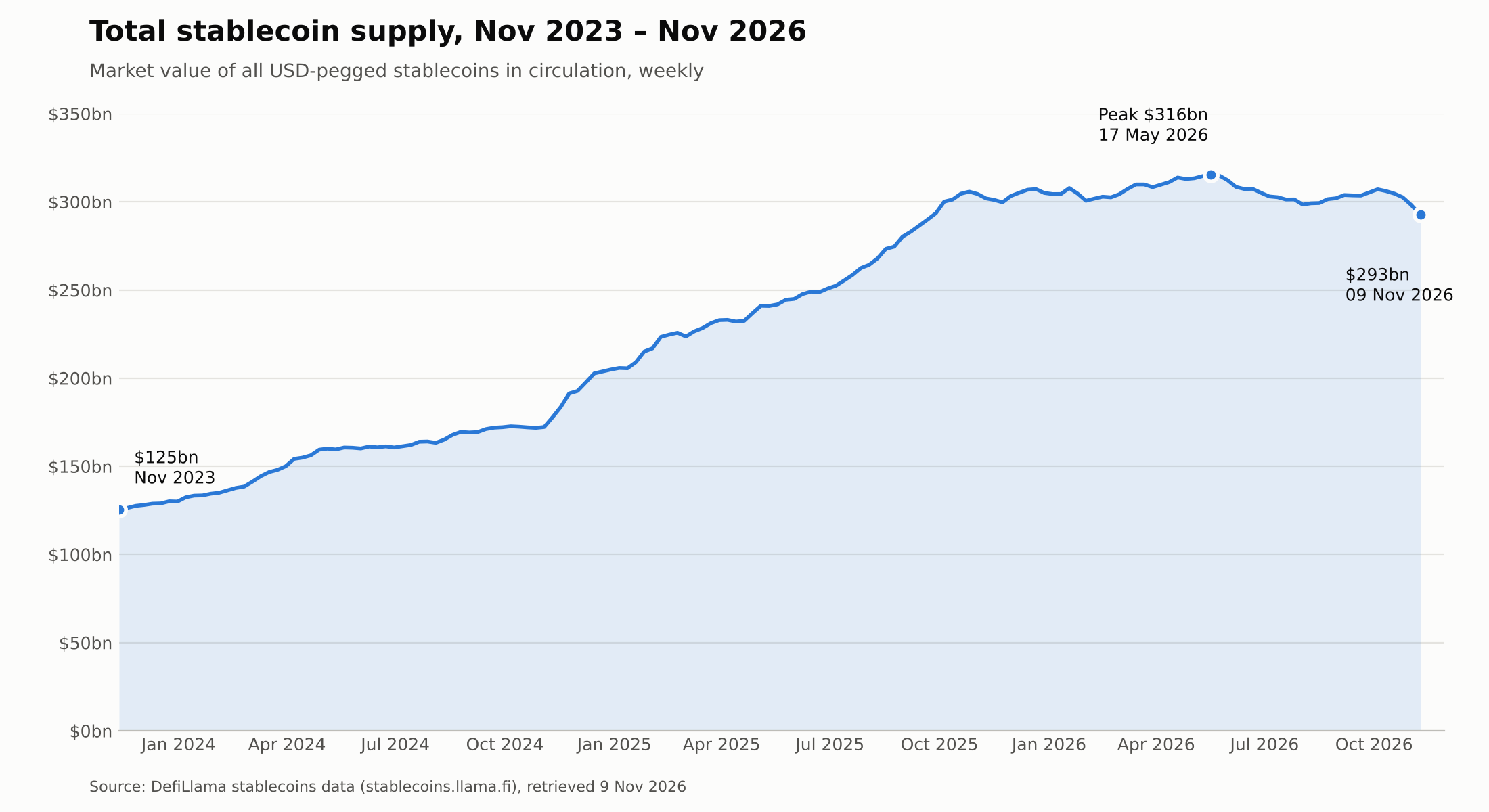
It will definitely play a role in funding the US Treasury, but it's not a game changer, marginal things matter more than the overall quantum. Even at the margin I don't think it's going to be big enough, because it's mainly going to be a means of transaction, and the float isn't going to be large enough in a 34 trillion dollar Treasury market with two trillion dollars of issuance. I think it's an important development, but more important for which emerging markets it can undermine, through illegal capital outflow, than for funding the Treasury.
IM: Russell, to pick up on something positive, in your paper of last month, you were talking about your concerns on France, but also fairly positive about the signs of restructuring in the UK, at least in terms of private sector balance sheets. So if you were Andy Burnham, what could he do to catalyse some animal spirits in the UK private sector, after such a long period of drawing the horns in?
RN: I would spend all my time sitting with the UK's biggest banks and asking, "Why aren't you lending?" They'll say, "There's no demand for credit." Fine, then go and find out why there's no demand for credit among SMEs, and fix it. The general feedback, and the consensus isn't always right, is increasingly, "Don't bother investing because of taxation and regulation." If that's true, it's true, but this economy isn't going to grow unless we get banks making loans for investment. The opportunities now are bigger than ever, because of geopolitics, huge opportunities for investment, huge opportunities to attract foreign investment if France is in trouble.
So rather than tell Andy Burnham what to do as a macro strategist, sit with the banks and find out what it would take for them to grow their balance sheets by seven percent a year. And, this will make me no friends in private equity, I would change the tax regime. There's no reason there should be a tax benefit for people who borrow money to acquire other companies, I can't see why that accrues a benefit to me as an individual, nor why we should give a tax benefit to corporates that borrow to invest in acquisitions, but not for those who simply go out and invest directly. We could reorientate the banking system to work towards that. But it's a micro issue, why aren't British companies borrowing, is it partly that banks are unwilling to lend? We can fix that, but it may need a change in the tax regime or regulation.
SO: Two things, Russell. I had lunch last week in London with some political people, and they were suggesting that one of the best things Burnham could do would be to abolish, or at least change, the triple lock, since it wasn't his promise to keep. Second, related to Australia, analogous to your point on private equity, it looks like they're going to get rid of negative gearing finally, which won't be great for the Australian housing market in theory, but does remove that distortion. Are we at a point in the UK, and I guess this is a call on Burnham's personality, where he'd be willing to take those kinds of decisions?
RN: I think absolutely he should take those decisions, though I've no insight into whether he's the man to take the risk. The good thing is he's so far behind in the polls that he's got to take some risk.
JS: Is there any indication that these ideas are congruent with the people who were touted as advisers, Andy Haldane and Jim O'Neill [neither of which ultimately took up positions with the new adminsitration], do you think it's in their heads?
SO: Jim's a very wily politician, not the best economist I've ever worked with, though he's a very capable one, but first and foremost a politician, I don't know what his instincts are. Haldane, you probably know personally, Russell, he seems a reasonably bright guy.
IM: They both seem to be sensible people who can at least analyse ideas.
SO: They'd understand Russell's basic productivity argument for the UK, but whether Labour is brave enough politically... they backed off over the winter fuel allowance, which was a sensible thing to do, but that was in effect the end of the Starmer programme, I'm sure, and then losing the second attempt to amend welfare. So the left wing of the Labour Party is going to be kicking and screaming if Burnham tries to do this, does he basically tell them to get lost?
RN: He has to, if he wants to win an election. I think there's a fundamental change in the country I was brought up in, where the so called working class worked for corporations with a boss, and they don't any more, they're way beyond that, and to the extent they're not working for themselves, as tradespeople or whatever, they work in small companies owned by somebody they know, probably employing a dozen people.
Those people aren't as keen on welfare spending as perhaps they once were, and that's why you've got this revolution in politics, why they're voting more to the right than ever. It's not just about immigration, there's something more fundamental, a change in the nature of employment, and if Burnham can understand and seize that, it means putting up two fingers to the North London Labour Party, whoever they are, they're not blue collar, and don't support policies in favour of blue collar workers, they support policies that make for good dinner parties.
It's time the Labour Party stood up to them, and stood up for the people it's supposed to represent, most of whom are self employed or working in very small companies. It can't be the party of ideology any more, or it's finished, and Reform wins.
SO: So it's like the California Democrats in that sense?
RN: All that ideological nonsense isn't what the Labour Party was, it's run through the party for a long time, it's not a new problem, and occasionally there are revolutions in the party where it wakes up and says, "This is who we're supposed to represent." It's not ideological, it's practical, and one thing you could say in favour of Keir Starmer is that he was ultimately practical, because none of us really know what his ideology is. Maybe Burnham can build on that. It's not clear all the benefits that accrued to Manchester were down to Andy Burnham's actions, but on the whole Manchester has delivered more for that section of society than other parts of the UK.
IM: One thing we've discussed, James, is the amount of M&A we've had in the UK, private equity and foreigners buying UK corporates. This week we had a bid from a US infrastructure fund for our largest listed real estate company, Segro. One reason a lot of the UK REITs don't want to borrow more, Russell, is that they still trade at big discounts to NAV, even though it's been eighteen months or so since commercial property NAVs stopped falling. So you need more of a virtuous circle, rather than just banks asking, "Do you want more debt?" and REITs saying, "We're under pressure from shareholders to buy back shares instead, because we trade at 70% of NAV."
RN: So bank credit could be the trigger, I'm not suggesting it's the whole thing.
IM: Russell, when you talk about spurring bank credit to invest, where do you see opportunities where the return would actually justify the investment in the UK?
RN: The industrial world has changed. My view, which we may not all share, is that we will buy less and less from China for geopolitical and strategic reasons, and the reindustrialisation of the world is real, that's where the investment can go. This is an interesting stage in human history, because I'm not aware of any time outside of warfare when a country has had to replicate an existing productive capital base from scratch. Usually when you borrow to invest you're building new capacity, but now you're actually just replicating what already existed in China. There are huge opportunities for every developed country, including the UK, to make that investment.
SO: But the corollary is a higher cost of capital and a lower valuation for equity.
RN: Look at which industries China has dominated for thirty years, some of it can be medical devices, it doesn't have to be shipbuilding. The NHS is saying it doesn't want to buy any more Chinese medical equipment because it doesn't trust it. The Danes are saying the same, they've cancelled an order of buses from China because they think China could remotely turn the buses off. The UK government has said Chinese companies can't manufacture wind turbines here for the same reason. The opportunities are absolutely immense because of this distrust, whether it's misplaced or not is a different question, but the opportunities are huge.
SO: One thing about Jim O'Neill, he's very pro China.
RN: Either people are going to have to be prevented from buying Chinese cars, or the German car industry is in big trouble, it's going to be the second one, not the first. We all have to make a decision on this. If you think China's cost of production will keep falling, and it's not just an exchange rate thing, it's much more profound, and that it will wipe out the productive capacity of the rest of the world, that's one view. I've got a completely different view, and I think it creates massive investment opportunities.
SO: Jim O'Neill was one of the intellectual figures behind Osborne and Cameron's "golden age" with China. It'll be interesting to see whether his influence extends into foreign policy. One person I had lunch with last week, prominent in US security media, who talks about wind turbine kill switches and so on, was actually quite downbeat that the UK government really understood this, thanks partly to successful Chinese lobbying, and partly because there are still people who believe they're going to make money out of China.
RN: I can give you practical examples of things that, in my opinion, have no national security relevance whatsoever, where we're already stopping purchases of Chinese products, buses and roof tiles. If trust has fallen that far already, there's a lot of trust to rebuild. Maybe this administration will start rebuilding it. But if Germany allows China to keep doing what it's doing to its car industry, I can't conceive of Germany getting back to a world where it allows that. Nor Trump, for that matter, though it's possible, Simon, I think it's a problem.
SO: The German and British businessmen I speak to in Hong Kong still believe China is going to be the great opportunity, there's a complete disconnect. Maybe the debate has shifted, but Europe has a collective action problem with respect to China, which is masterful at saying, "Pedro Sanchez is my friend in Spain," and using that as a back door, Orban did the same in Hungary.
RN: Europe has many problems, but its relationship with China is one of the biggest, because it will split Europe right down the middle. There are many things splitting Europe already, but China is another, and to make Europe work it has to centralise, fiscally and politically, and the China question will decentralise it instead. Many of Merz's decisions now are, in my opinion, completely against European law, if anyone took him to the European Court of Justice he wouldn't get away with them. Many of the things he's doing are things David Cameron asked Merkel for, which she refused, and the Germans are now doing anyway. Jacques de Larosiere, who is 96 now, wrote a great article a few months ago saying anyone who thinks Europe is centralising in this period is delusional, it's decentralising rapidly, and how it deals with China is going to accelerate that.
FD: Russell, if you're right, and I don't share that view, it's the end of the equity culture, because the rush to liquidity we talked about gets bigger, since we need to pay for all this, returns are going to be lower because you're going from consolidation to fragmentation, and inflation is going to be higher because you're moving away from economies of scale, so prices will rise. At the same time, you've got declining populations because of rapid ageing in Europe. I can't quite get my head around how it all fits together.
RN: That's a compelling case against equity indices, but not against equity itself, assuming active management can make a big difference. If you go back to 1966, when the cyclically adjusted PE was 25 or 26, it declined all the way to single digits by 1982. If you'd bought value stocks in '66 you got a positive real return, if you bought the index you didn't.
FD: I understand the bottom up growth argument, I'm thinking very specifically, if I'm going to build a petrochemical plant in the UK, because of security risk in importing from elsewhere, there's a minimum economic size for such a plant, and if the UK can't provide that level of demand, who makes up for it, given the complexity of a refinery and all the subsequent products, how do you get the minimum revenue required to build the thing?
RN: We're still the sixth largest economy in the world, so if the sixth biggest economy can't do it, it can't do it, and it moves on to what else it can do. If you look at everything China's come to dominate, and where the rest of the world is going to rebuild that capacity, maybe it isn't a UK chemical plant, maybe it's shipbuilding, or medical devices. Taking market share back from Chinese corporations, which will be the trend for the next twenty years, creates opportunities across a huge range of products, even if it isn't UK petrochemicals, which probably can't work anyway given the lack of cheap energy here. But there's a period of opportunity.
FD: What would inflation be under this scenario?
RN: That's a brilliant question. There's a fantastic speech Macron often makes, he makes very good speeches even if he doesn't act on them, one in April 2024 where he said that if we're to achieve what we want in terms of investment and strategic independence, it's inconceivable that we can keep a 2% inflation target. That's a big statement from the biggest country in Europe, at least by the size of its banking system and debt markets, if not its economy, and a 2% inflation target is entirely incompatible with those strategic goals. It's just not going to happen, so that target, whether de facto or de jure, gets abandoned, because you can't achieve both.
JS: Russell, can you share to share your own personal investment positioning? You don't own too many things, but they tend to be the same things.
RN: Cash, gold, and value stocks, oriented towards reindustrialisation. If I'm wrong about that, because there's a rapprochement with China, then I'll be wrong, but I don't think I'll lose a lot of money being wrong. If I'm right, we have one of the biggest investment booms in history, which comes back to the point about whether it's really bearish for equities.
JS: It's bearish for the index, but there are so many equities that would massively benefit from a European and UK focused rebuilding. There are a hundred and forty eight thousand mutual funds in the world.
RN: I don't know of a single one that's a friendshoring reindustrialisation fund, there may be one, but I haven't come across it. That's amazing, really.
FD: One last quick question. Somebody in the Labour Party has a radically different proposal for growth, which is basically, these people have got lots of money, let's take it. Is that another way of doing it?
RN: I think it fails, it's obviously not good for savers, but there is another way of doing it. We haven't talked about financial repression, though I talk about it a lot, and it's worth remembering that financial repression, while inherently negative for savers, isn't necessarily negative for the whole economy. It's a bullet point where people's debt burdens are lifted, so it's a pro-growth thing, but a pro-growth thing that isn't good for savers. In aggregate, this is a form of growth that isn't good for savers, bondholders, or holders of the equity index, but if you've got a pretty extreme asset allocation, you'll be okay.
JS: Good of you to take the time on a Saturday morning with jet lag, and, I imagine, having to comfort a disappointed son after the football.
RN: A young man supporting Scotland is always going to be disappointed. I have the structural advantage of not being Scottish myself. But the 'wee man', as we call our sons in Scotland, was absolutely devastated. I've been to three World Cups to watch Scotland, so I'm perhaps not quite as invested any more.
-end-